Resources:
Datasheet
FT231XS-R USB 2.0 Full-Speed to Full Handshake UART Interface IC with 3 Mbaud and Battery Charger Detection
The FTDI FT231XS-R is a single-channel USB-to-UART interface IC designed to provide full modem-handshake serial connectivity for embedded systems, industrial equipment, development tools, communication adapters, and instrumentation. It handles the complete USB protocol internally, allowing designers to add USB 2.0 Full-Speed connectivity without developing USB-specific firmware. The UART supports data rates from 300 baud to 3 Mbaud, together with TXD, RXD, RTS#, CTS#, DTR#, DSR#, DCD#, and RI# signals for full hardware handshaking.
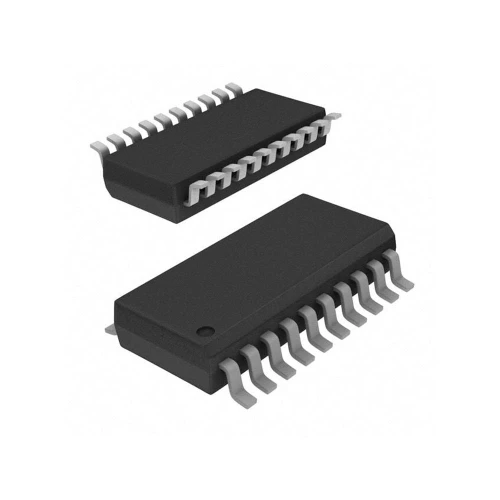
The device integrates 2048 bytes of multi-time-programmable memory for USB descriptors and CBUS configuration, 512-byte receive and transmit buffers, internal clock generation, voltage regulators, power-on reset, and configurable CBUS I/O. USB Battery Charger Detection allows connected equipment to identify a compatible dedicated charging port and control external charging circuitry. Supplied as the FT231XS-R tape-and-reel variant in a 20-pin SSOP package, the device operates from -40°C to +85°C and supports FTDI VCP and D2XX drivers for straightforward software integration.
Key Features
- USB-to-UART Bridge: Converts USB 2.0 Full-Speed communication to a full-handshake asynchronous UART interface.
- USB 2.0 Full-Speed: Supports USB communication at up to 12 Mbps.
- Up to 3 Mbaud UART: Supports serial communication from 300 baud to 3 Mbaud.
- Full Modem Handshaking: Provides TXD, RXD, RTS#, CTS#, DTR#, DSR#, DCD#, and RI# UART signals.
- Integrated USB Protocol: Handles the complete USB protocol internally without USB-specific firmware on the host controller.
- 2048-Byte MTP Memory: Stores USB descriptors, device settings, CBUS configuration, and other programmable parameters.
- 512-Byte RX Buffer: Large receive buffer supports sustained serial data throughput.
- 512-Byte TX Buffer: Integrated transmit buffer uses buffer-smoothing technology for efficient data transfer.
- 4 Configurable CBUS Pins: CBUS0–CBUS3 can provide GPIO, LED, clock, power-control, TXDEN, battery-detection, and other functions.
- USB Battery Charger Detection: Detects compatible Dedicated Charging Ports and provides a control signal for external battery-charging circuitry.
- Factory-Programmed Serial Number: Each device is supplied with a unique USB serial number.
- VCP Driver Support: Allows compatible operating systems to recognise the device as a conventional COM port.
- D2XX Driver Support: Enables direct application access through FTDI's programming interface.
- Integrated Clock Generator: Eliminates the requirement for an external crystal during normal operation.
- Configurable Clock Output: CBUS pins can output supported clock frequencies for external MCU or FPGA applications.
- Flexible UART Format: Supports 7 or 8 data bits, 1 or 2 stop bits, and odd, even, mark, space, or no parity.
- UART Signal Inversion: Selected serial signals can be inverted through device configuration.
- Bit-Bang Modes: Supports synchronous and asynchronous bit-bang operation for general-purpose digital interfacing.
- Flexible I/O Voltage: VCCIO supports 1.8–3.3 V logic, with inputs tolerant of 5 V.
- Integrated 3.3 V Output: Provides up to 50 mA from the internal 3.3 V regulator under supported operating conditions.
- Low Operating Current: Typical active current is approximately 8 mA.
- Low Suspend Current: Typical USB suspend current is approximately 125 uA.
- Multiple Power Configurations: Supports bus-powered, self-powered, and bus-powered systems with external power switching.
- Industrial Temperature Range: Rated for operation from -40°C to +85°C.
- Tape-and-Reel Packaging: The -R suffix identifies the production reel configuration.
Applications
- USB-to-serial converters
- USB-to-RS232 interfaces
- USB-to-RS422 interfaces
- USB-to-RS485 interfaces
- Microcontroller programming interfaces
- Embedded debug ports
- Industrial control systems
- USB instrumentation
- Data loggers
- Development boards
- FPGA interfaces
- Cellular modem interfaces
- USB hardware modems
- Barcode readers
- Point-of-sale equipment
- Legacy peripheral USB upgrades
- Battery-powered USB devices
- Embedded communication systems