Resources:
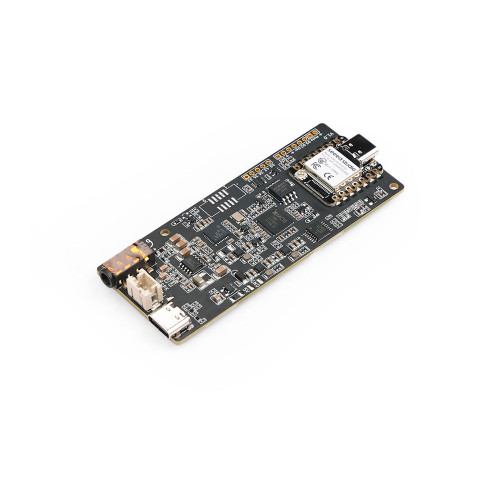
Seeed Studio reSpeaker Lite 2-Mic Array Voice Kit with XMOS XU316, XIAO ESP32-S3 and ESPHome Support - For Smart Voice Assistants and Home Automation Applications.
The Seeed Studio reSpeaker Lite 2-Mic Array Voice Kit is an open-source voice-interface development platform designed for smart assistants, Home Assistant voice satellites, speech recognition, robotics, conferencing, and embedded audio applications. It combines 2 high-performance digital microphones with the XMOS XU316 audio processor to capture speech from distances up to approximately 3 m while performing audio front-end processing such as Acoustic Echo Cancellation, Interference Cancellation, Noise Suppression, Voice-to-Noise Ratio processing, and Automatic Gain Control.
This version includes a pre-soldered XIAO ESP32-S3 connected through I2S, providing a convenient embedded controller for ESPHome, Home Assistant, and custom voice applications without requiring manual XIAO soldering. The board also provides USB Type-C, a 3.5 mm audio output, speaker connector, programmable WS2812 RGB LED, mute and user buttons, and external 5 V power support. Arduino, PlatformIO, MicroPython, and CircuitPython support make it suitable for both ready-made Home Assistant voice projects and customised embedded audio development.
Key Features
- XMOS XU316 Audio Processor: Dedicated audio processor handles microphone capture, voice enhancement, and audio transmission independently of the host controller.
- Dual Digital Microphones: 2 high-performance microphones provide voice capture for speech recognition and interactive voice applications.
- Up to 3 m Far-Field Capture: Designed to capture spoken commands from distances up to approximately 3 m under suitable acoustic conditions.
- Acoustic Echo Cancellation: Helps suppress reproduced speaker audio from the microphone input for more reliable voice interaction.
- Interference Cancellation: Reduces directional or point-source acoustic interference using the dual-microphone input.
- Noise Suppression: Reduces unwanted background noise before audio is passed to speech-recognition software.
- Automatic Gain Control: Dynamically adjusts input gain to maintain more consistent speech levels.
- Voice-to-Noise Ratio Processing: Supports voice enhancement for improved downstream speech processing.
- Pre-Soldered XIAO ESP32-S3: Embedded XIAO controller is factory-mounted through the I2S interface for solderless application development.
- ESPHome Integration: Supports voice-assistant development and Home Assistant integration through ESPHome-based firmware workflows.
- Home Assistant Voice Applications: Suitable for creating local voice satellites and smart-home command interfaces.
- USB Audio Support: Can operate as a USB Audio Class 2.0 device when loaded with the appropriate USB firmware.
- I2S Audio Interface: Enables direct digital-audio communication between the XMOS processor and XIAO ESP32-S3.
- 3.5 mm Audio Output: Supports headphones or compatible active speakers for audio playback.
- Speaker Connector: Supports connection to compatible amplified-speaker configurations up to the documented 5 W class.
- Programmable WS2812 RGB LED: Provides visual status, activity, wake-state, and application feedback.
- Physical Mute Button: Allows microphone input to be disabled directly from the board.
- Mute Status Indicator: Dedicated LED indicates when microphone input has been muted.
- User-Programmable Button: Provides an additional physical input for application-defined functions.
- USB Type-C Interface: Supports 5 V power, data transfer, USB audio, and firmware-related workflows.
- External 5 V Input: Dedicated solder pads provide an alternative 5 V power option for embedded installations.
- DFU Firmware Updates: XMOS firmware can be updated for USB or I2S operating profiles using DFU tools.
- Open-Source Development: Supports custom hardware, firmware, and software development for voice-enabled products.
Applications
- Home Assistant voice satellites
- ESPHome voice assistants
- Smart speakers
- Virtual assistants
- Voice-controlled home automation
- Wake-word detection
- Keyword spotting
- Speech recognition
- Voice-command interfaces
- Robotics voice control
- Voice-controlled remote vehicles
- Interactive kiosks
- Audio-processing development
- Conference systems
- Voice recorders
- Smart appliances
- Embedded speech interfaces
- Cloud speech-to-text systems
- Amazon Alexa development
- Google Assistant development
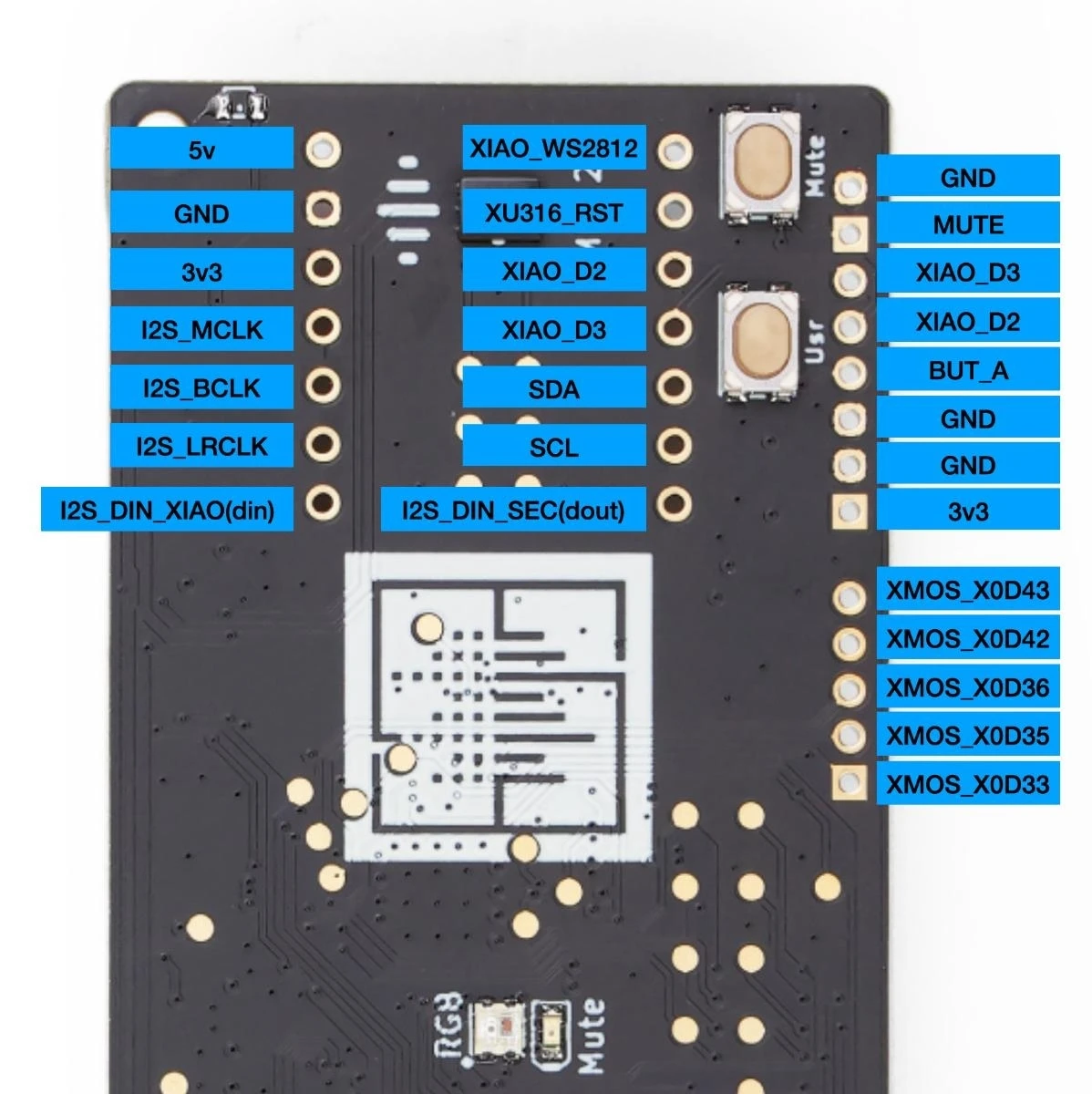
Hardware Overview
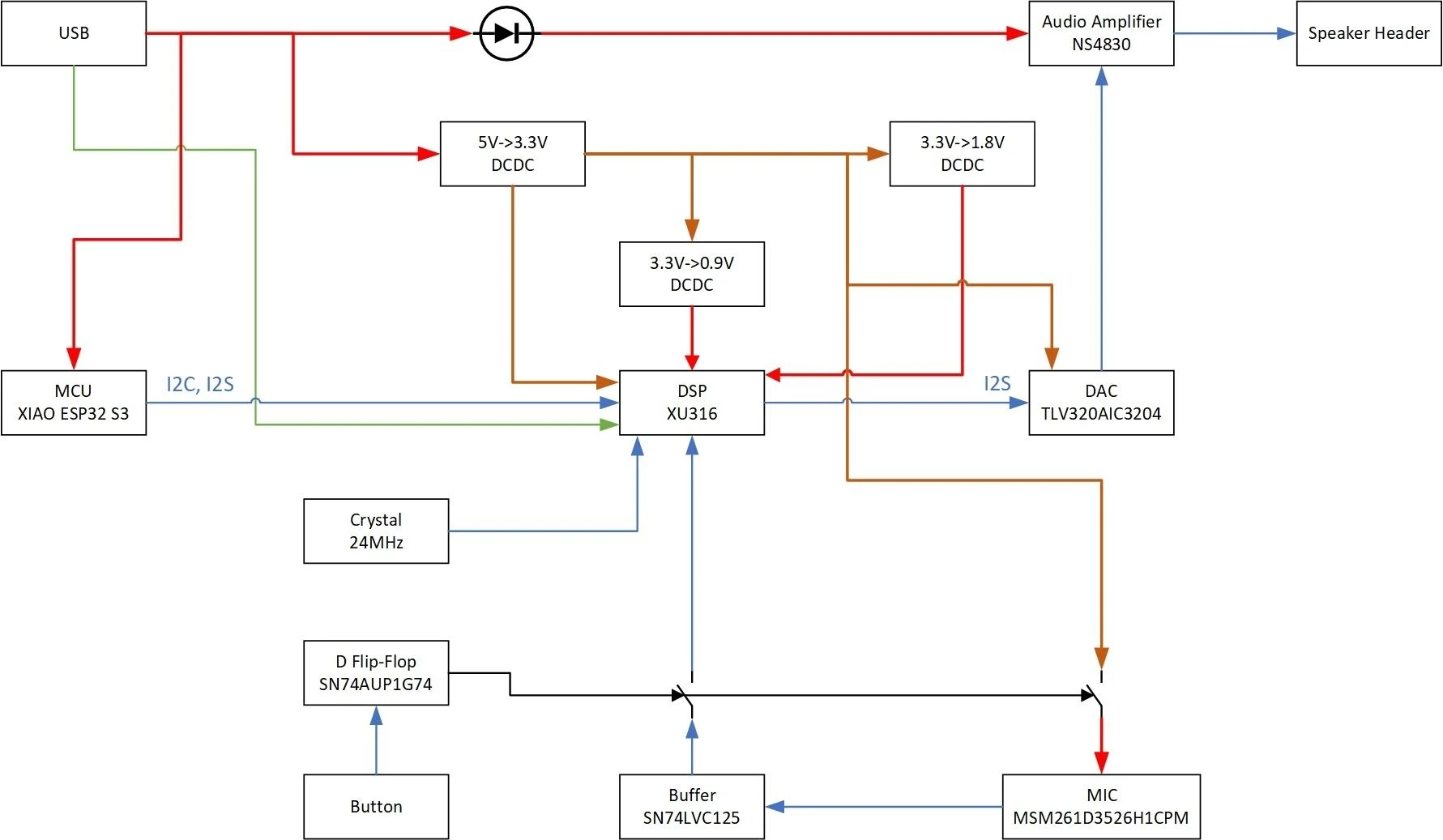
Flowchart
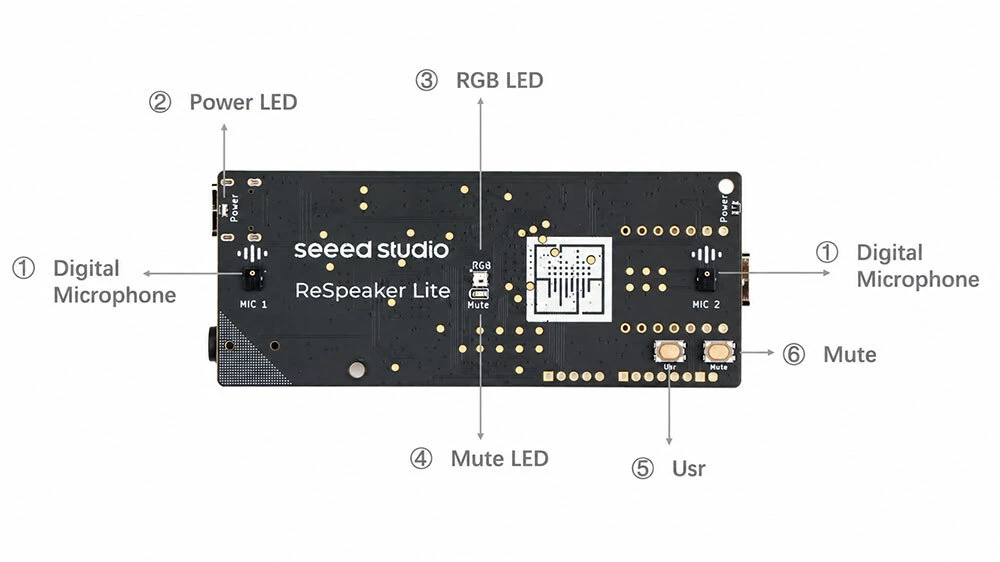
Diagram
| 1 |
Dual Microphone Array |
Provides high-quality audio input. |
| 2 |
Power Indicator Light |
Illuminates when powered on. |
| 3 |
RGB Light |
Programmable WS2812, provides visual feedback. |
| 4 |
Mute Indicator Light |
Lights up red when the mute button is pressed. |
| 5 |
USR Button |
User-defined button. |
| 6 |
Mute Button |
Mutes audio input when pressed. |
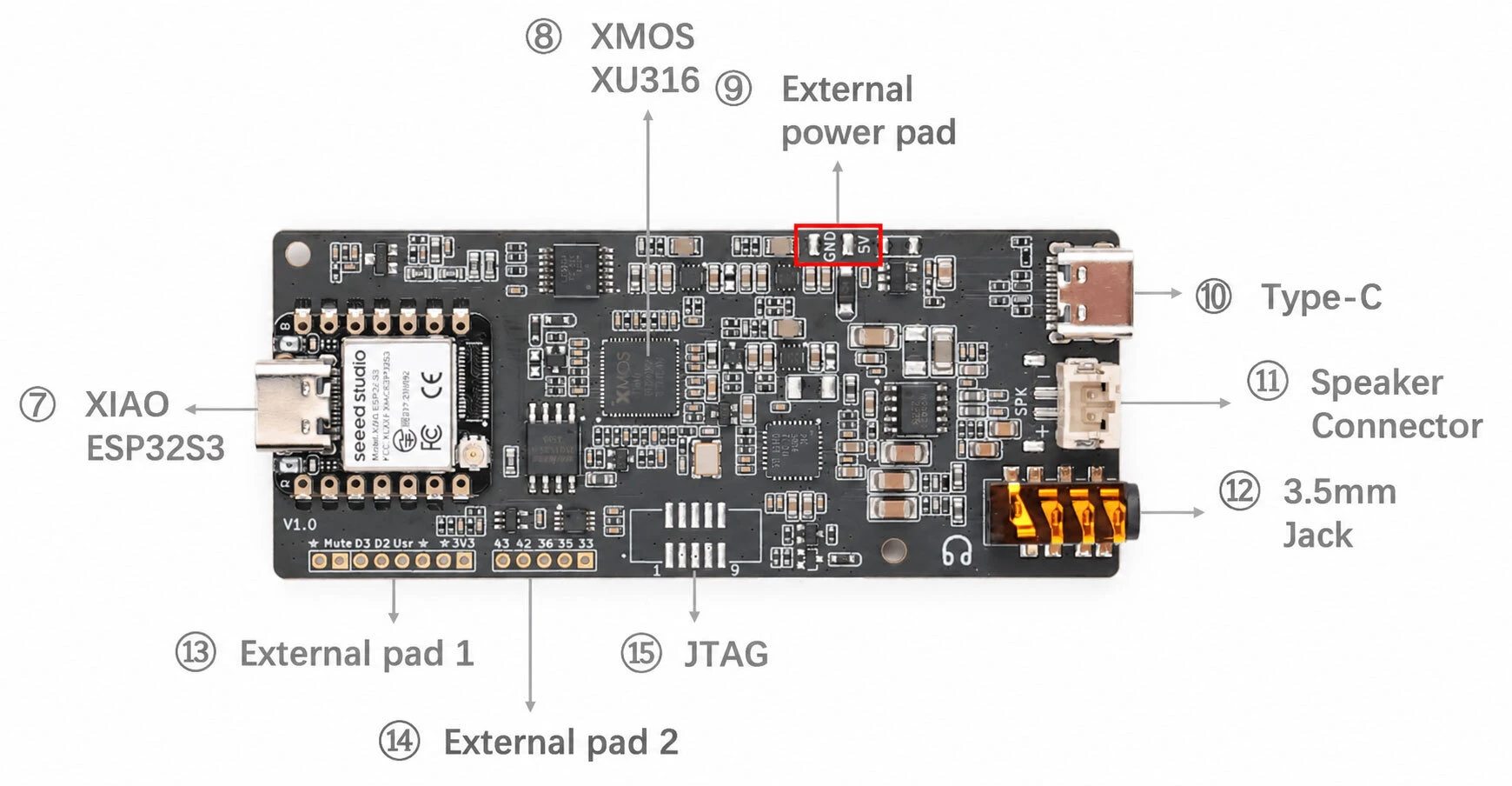
| 7 |
XIAO ESP32S3 |
For further development and integration. |
| 8 |
XU316 Core Processor |
Responsible for audio processing and transmission. |
| 9 |
External Power Supply Solder Pad |
Supports external 5V power supply. |
| 10 |
USB Type-C Port |
Used for power and data transmission. |
| 11 |
Speaker Connector |
For audio output. Supports 5W amplifier speakers. |
| 12 |
3.5mm Headphone jack |
Output audio. We can plug active speakers or Headphones into this port. |
| 13 |
External power pad 1 |
Unused IO pins on the XIAO ESP32. |
| 14 |
External power pad 2 |
Unused IO pins on the XU316. |
| 15 |
JTAG |
For debugging and programming the XU316. |
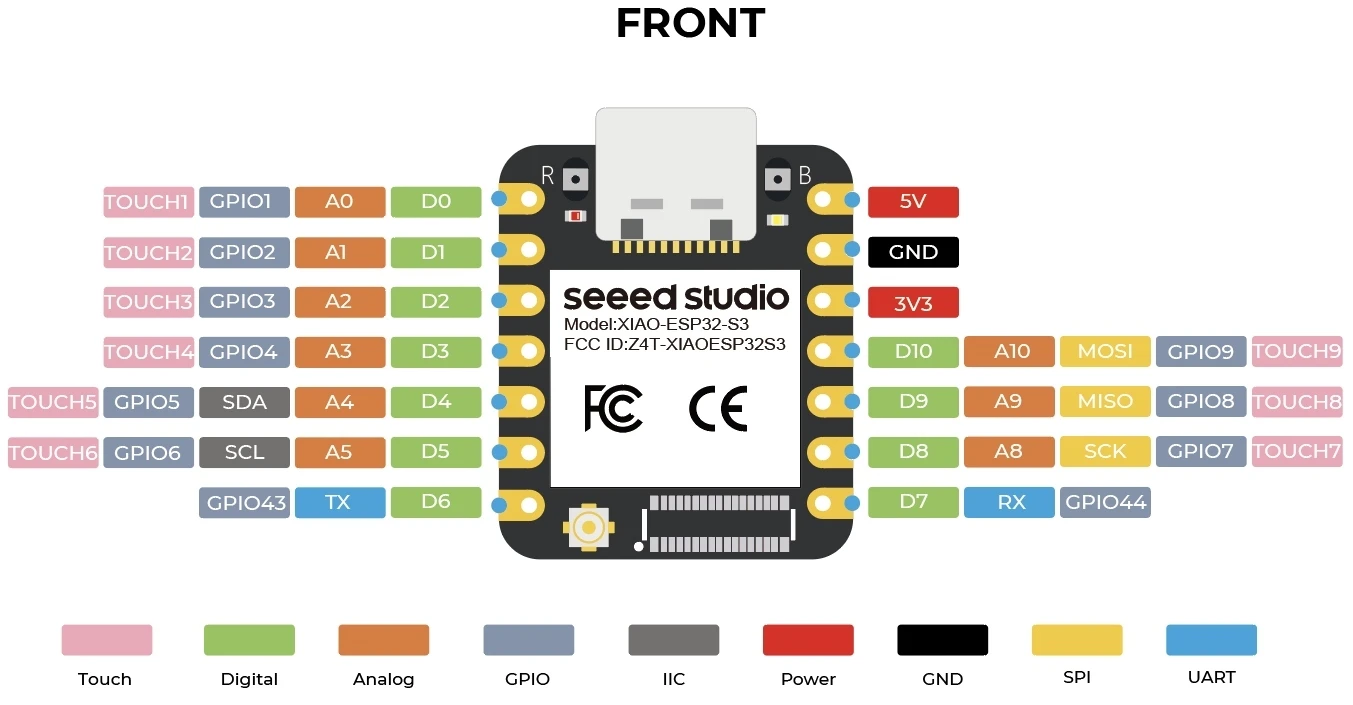
Pinout Diagram of XIAO ESP32S3
Package Includes:
- reSpeaker Lite Voice Assistant Kitx1