Resources:
Offline AI Binocular 3D Vision Recognition Sensor Face / Palm Vein / QR Code
The Offline AI Binocular 3D Vision Recognition Sensor is a high-security, standalone identification module designed for reliable and versatile identity authentication. Powered by an onboard AI processor, it uses dual colour and infrared cameras to perform all recognition tasks locally without relying on cloud connectivity. This multi-modal sensor integrates face recognition, palm vein recognition, and QR code scanning into a single compact unit. With advanced 3D liveness detection for anti-spoofing, complete offline AI processing, and local storage support for up to 1,000 users, it ensures fast, secure, and privacy-focused operation. The simple UART interface allows seamless integration into access control systems, smart homes, and automated retail terminals.
Key Features
- Three-in-One Recognition Capability – Supports face recognition, palm vein recognition, and QR code scanning in one device
- Binocular 3D Vision System – Uses dual colour and infrared cameras for accurate depth perception
- Advanced 3D Liveness Detection – Prevents spoofing using photos, videos, or fake biometric samples
- Offline AI Processing – Performs all computations locally with no cloud or external processing required
- High-Security User Storage – Stores biometric data for up to 1,000 users locally
- Onboard AI Processor – Delivers fast and reliable recognition performance
- UART Communication Interface – Enables easy and quick integration with host controllers
- Compact and Standalone Design – Ideal for embedded security and authentication systems
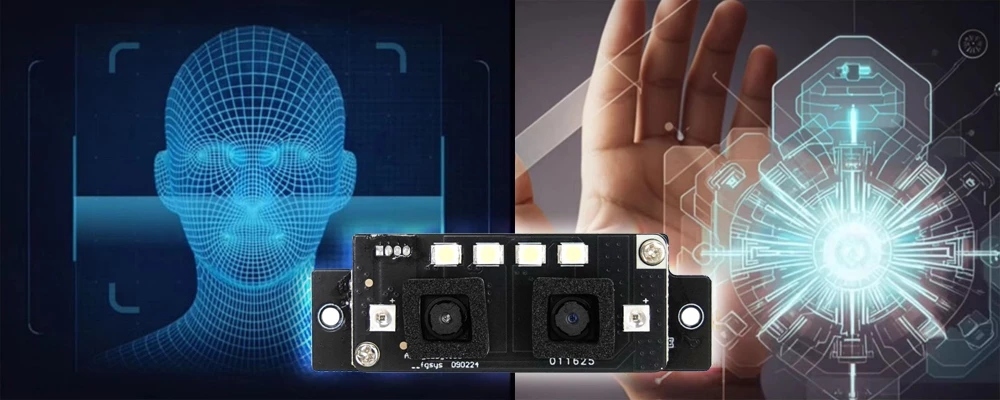
High-Security Biometrics with 3D Liveness Detection
Security is essential in authenticating systems. This face recognition sensor uses a binocular camera system (RGB + Infrared) to collect 3D depth information, allowing for a powerful liveness detection algorithm. This technique effectively distinguishes between a living person and a 2D representation, giving strong security against spoofing efforts with images or videos. With a Face Recognition False Acceptance Rate (FAR) of 0.001%, the module provides a level of security appropriate for critical access control applications.
Versatile 3-in-1 Recognition Capability
The AI binocular vision sensor provides unprecedented flexibility by combining three distinct recognition algorithms. Deep learning-based face recognition enables quick, contactless access. The palm vein and palm print identification method enhances security by identifying unique subcutaneous vein patterns, a biometric identifier that is extremely difficult to copy. Finally, the embedded QR code decoding provides a quick option for granting temporary access, processing payments, or device pairing, allowing the sensor to meet a wide range of operational needs.
Powerful On-Module Offline AI Processing
The AI vision camera is powered by a specialized System-on-Chip (SoC) with a 0.5 TOPS Neural Processing Unit (NPU) that handles all complicated AI algorithms internally. This "edge computing" design requires no processing resources from the host device, allowing it to be controlled by any microcontroller, including simple models such as an Arduino Uno. All user data, including 1,000 face and 1,000 palm vein templates, is saved and processed locally, assuring system performance, data privacy, and functionality even when there is no network connection.
Seamless Integration via UART & USB
The binocular camera is designed for ease of installation, communicating identification results using a simple UART serial protocol that may be easily integrated into both new and existing product designs. Furthermore, the USB interface supports the UVC (USB Video Class) protocol, which allows the module to transmit video similar to a regular camera. This dual feature is extremely useful for applications that require video feeds for monitoring, visual confirmation, or establishing video intercom networks.
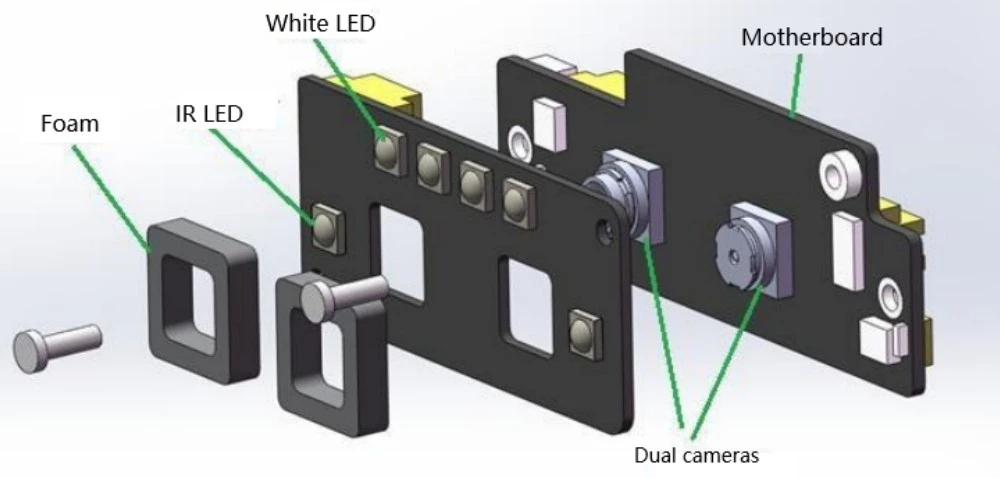
Figure: AI binocular vision recognition sensor hardware composition diagram
Applications
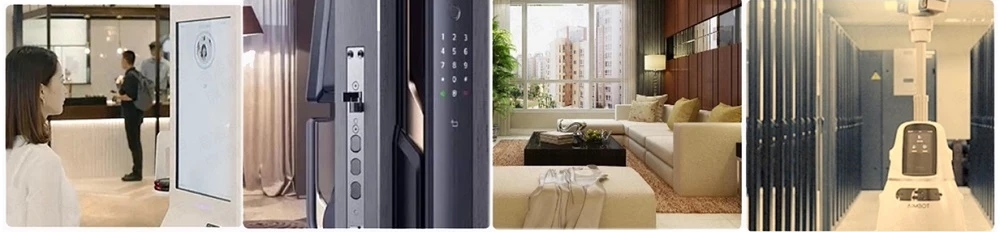
- Smart home systems
- Smart door locks
- Self-service retail payment terminals
- 3D face/palm vein payment systems
- Palm vein authentication systems
Package Includes:
- AI Binocular Vision Recognition Sensor (Face & Palm Vein & QR Code) ×1
- 1.25mm 4-pin to Dupont female connector cable ×1
- USB data cable ×1