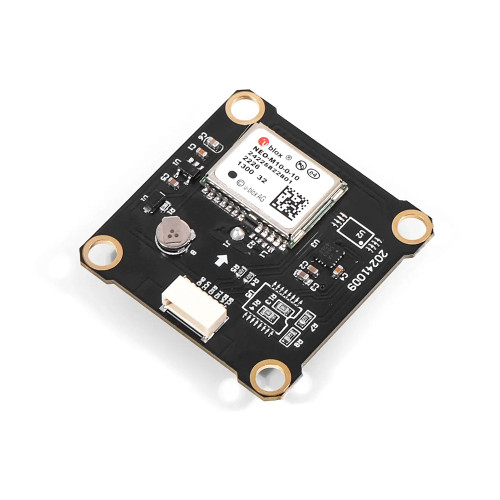
M10 NEO-M10 Multi-Constellation GNSS Module with Compass for RC FPV Drones, Airplanes, and Quadcopters - GPS, GLONASS, Galileo, and BeiDou with Fast Cold-Start and Anti-Interference Performance
The M10 is a compact multi-constellation GNSS positioning module built around the u-blox NEO-M10 chipset, integrating GPS, GLONASS, Galileo, and BeiDou satellite system reception alongside an onboard compass for complete heading and position sensing in a single unit purpose-designed for RC FPV drones, racing quadcopters, autonomous fixed-wing aircraft, and multi-rotor UAV platforms. The NEO-M10 chipset represents the current generation of u-blox M10 series receivers, combining high-precision GNSS positioning with the simultaneous multi-constellation reception capability required to maintain a reliable satellite fix in the partially obstructed, high-vibration, and electromagnetically demanding environments typical of FPV and autonomous UAV operations. By receiving signals from GPS, GLONASS, Galileo, and BeiDou simultaneously, the M10 can access a substantially larger pool of visible satellites at any given sky position than single-constellation or dual-constellation receivers, directly improving fix reliability, position accuracy, and resistance to satellite signal outages caused by partial sky obstruction from the airframe, terrain, or structures in the flight environment.
The onboard compass provides heading reference data directly to the flight controller alongside the GNSS position and velocity output, consolidating two critical navigation sensor inputs - position and heading - into a single externally mounted module that can be positioned away from the electromagnetic interference generated by the flight controller, ESC power switching, and motor drive currents on the main frame. Mounting the compass at the end of a GPS mast or in a magnetically clean location on the airframe significantly reduces compass heading error compared to flight controller-integrated magnetometers, improving the accuracy of position hold, waypoint navigation, return-to-home, and formation flight functions that depend on reliable heading data combined with accurate GNSS positioning. Fast cold-start and hot-start acquisition times allow the M10 to obtain a satellite fix rapidly after power-up, supporting quick pre-flight readiness for time-critical UAV operations, and the strong anti-interference performance of the NEO-M10 chipset sustains stable positioning output in complex electromagnetic environments where lower-grade GNSS modules exhibit degraded fix quality or signal loss.
Key Features
- GNSS Chipset: u-blox NEO-M10, a current-generation multi-constellation GNSS receiver for high-precision positioning in FPV drone and UAV applications
- Multi-Constellation Support: Simultaneous GPS, GLONASS, Galileo, and BeiDou reception for improved fix reliability, positioning accuracy, and satellite availability versus single or dual-constellation receivers
- Onboard Compass: Integrated magnetometer provides heading reference data alongside GNSS position and velocity output for complete navigation sensor integration in a single external module
- External Compass Positioning: Mast or frame-mount positioning away from flight controller EMI sources reduces compass heading error versus flight controller-integrated magnetometers
- High-Precision Positioning: Advanced GNSS technology delivers accurate position and velocity data for precise navigation, position hold, and autonomous flight control
- Fast Cold-Start Acquisition: Rapid cold-start satellite acquisition for quick pre-flight GPS readiness in time-critical UAV deployment scenarios
- Fast Hot-Start Acquisition: Near-instant satellite re-acquisition after brief power interruptions for minimal fix delay in intermittently powered systems
- Strong Anti-Interference Performance: NEO-M10 chipset sustains stable positioning output in complex electromagnetic environments, including high-current ESC and motor drive interference typical of FPV and racing drone frames
- Waypoint Navigation Support: Accurate position and velocity data enable autonomous pre-programmed waypoint route execution on compatible flight controllers
- Return-to-Home Support: Precise GNSS positioning provides reliable return-to-launch and return-to-home positioning data for safe autonomous recovery
- Multi-Aircraft Collaboration: Accurate per-aircraft positioning supports formation flight, collaborative mission, and swarm synchronisation applications
- FPV and Racing Drone Optimised: Compact, lightweight form factor and fast acquisition times suited to FPV racing quadcopters and freestyle builds requiring GPS-assisted flight modes
Applications
- RC FPV drones and racing quadcopters requiring GPS-assisted position hold, return-to-home, and rescue mode from a compact multi-constellation GNSS module with onboard compass
- Autonomous fixed-wing RC aircraft and UAV platforms requiring accurate GNSS positioning and heading data for waypoint navigation and autonomous route execution
- ArduPilot, Betaflight, iNav, and PX4 flight controller builds requiring an external GNSS module with an integrated compass for reduced magnetometer interference versus on-board compass alternatives
- Formation flight and multi-aircraft collaborative UAV builds require accurate per-aircraft GNSS positioning and synchronisation
- Long-range FPV and cruiser fixed-wing builds requiring fast cold-start GNSS acquisition and strong anti-interference performance in electromagnetically complex airframe environments
- Return-to-home and failsafe recovery builds requiring reliable multi-constellation GNSS positioning data for safe autonomous recovery to the launch point