Resources:
High Precision Laser-Based Methane (CH₄) Sensor with TDLAS Technology and %LEL Output for Research and Industrial Gas Monitoring (Lab-Grade CH4 Data + No Code Excel Export)
The Gravity Factory Calibrated Laser Quantitative Methane Sensor is a lab-grade gas detection module designed for accurate and interference-free methane (CH₄) measurement. Unlike conventional MQ-series sensors, this module uses advanced TDLAS (Tunable Diode Laser Absorption Spectroscopy) technology to deliver precise quantitative readings in %LEL (Lower Explosive Limit), making it suitable for research, safety monitoring, and industrial applications. Its factory calibration ensures consistent and reliable data output, enabling users to obtain publication-quality measurements without complex calibration procedures.
Built for ease of use and efficiency, this sensor supports seamless integration with development platforms and eliminates the need for soldering or extensive coding. The built-in data export functionality allows one-click transfer of measurement data to Excel, streamlining analysis and reporting workflows. Ideal for laboratories, environmental monitoring, gas safety systems, and academic research, this methane sensor offers a dependable and high-accuracy solution for modern gas sensing requirements.
Key Features
- TDLAS Laser Technology: High-precision methane detection with minimal interference
- Quantitative Output: Direct %LEL methane concentration readings
- Factory Calibrated: Ready-to-use with consistent and accurate performance
- Lab-Grade Accuracy: Suitable for research and analytical applications
- One-Click Data Export: Easily export data to Excel for analysis
- No Soldering Required: Plug-and-play design for quick deployment
- Stable and Reliable: Superior performance compared to MQ-type sensors
- Wide Application Range: Ideal for research labs, safety systems, and environmental monitoring
Figure: Lab-Grade Methane Sensor
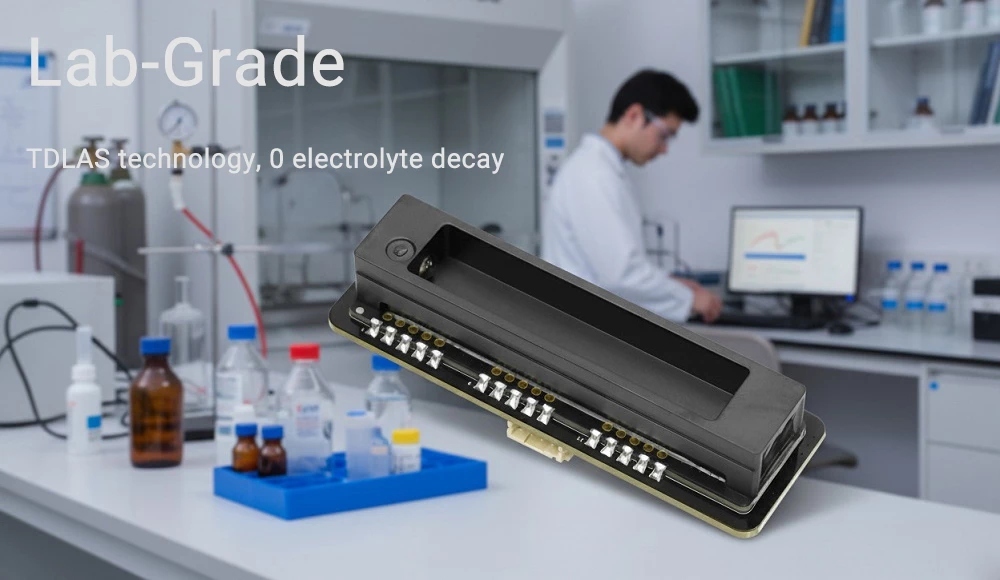
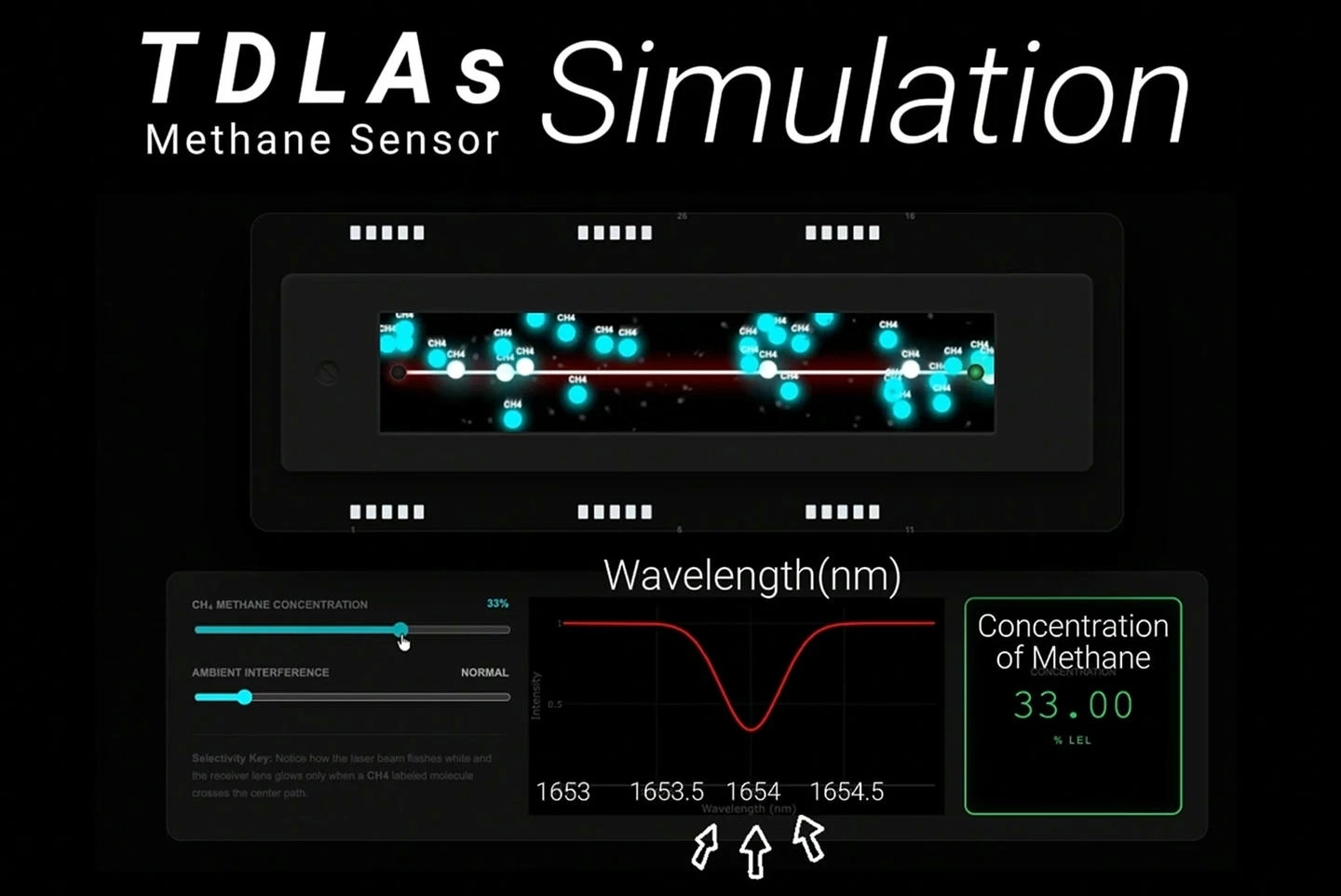
Figure: TDLAS Methane Sensor Technology
Academic-Grade Data Integrity for Credible Results
The methane sensor provides quantitative detection with data presented in%LEL (Lower Explosive Limit), resulting in journal-ready statistics and removing the hazy estimations that are frequently rejected during academic evaluation. It has a 2% LEL accuracy, making it appropriate for use in the methods part of papers to meet peer-review requirements. The sensor's 0% cross-gas interference ensures reliable data from complicated environments like fermenters or wastewater simulations, where gases like ethanol or CO₂ won't affect methane (CH₄) readings.
Figure: Data Output of Gravity: Factory Calibrated Laser Lab-Grade Methane Sensor

One-Click Data Workflow to Save Weeks of Logging Time
Pairing the CH4 sensor with the Gravity: Science Data Acquisition (SCI DAQ) Module, a no-programming accessory, allows for direct data reading and logging without the need for coding. The module's firmware automates data export, delivering analysis-ready files for Excel or MATLAB in three clicks while eliminating the need for manual transcription or Python coding. This configuration is designed for plug-and-play compatibility with Arduino and Raspberry Pi, and it can be deployed in less than 10 minutes without the need for soldering or debugging UART programs, allowing researchers to focus on their primary work. The timed data-logging feature consistently enables long-duration experiments, such as 48-hour adsorption tests, by automatically saving data even when the attached computer goes to sleep mode.
Figure: Quantitative Measurement of TDLAS Methane Sensor & Gravity: Science Data Acquisition (SCI DAQ) Module
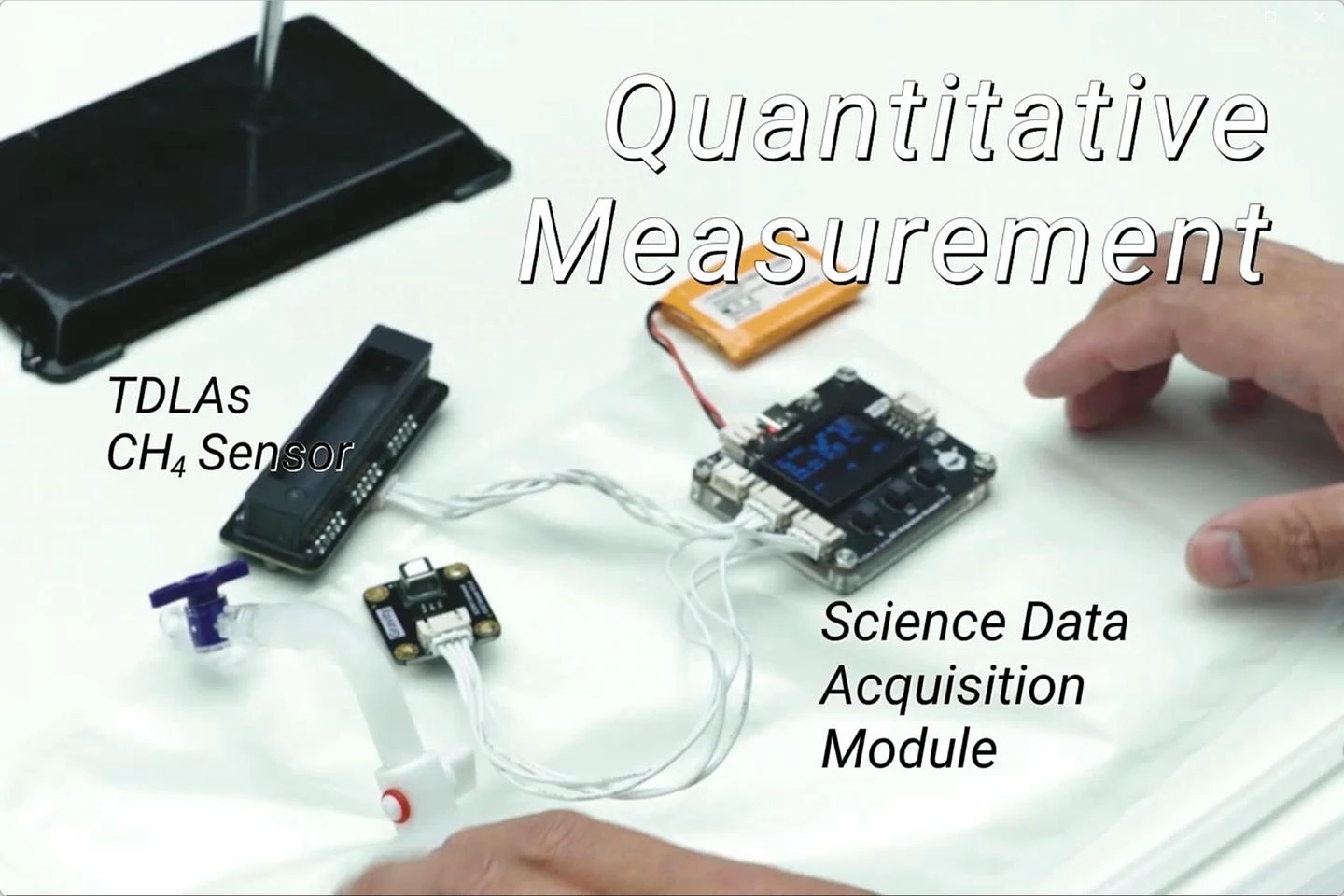
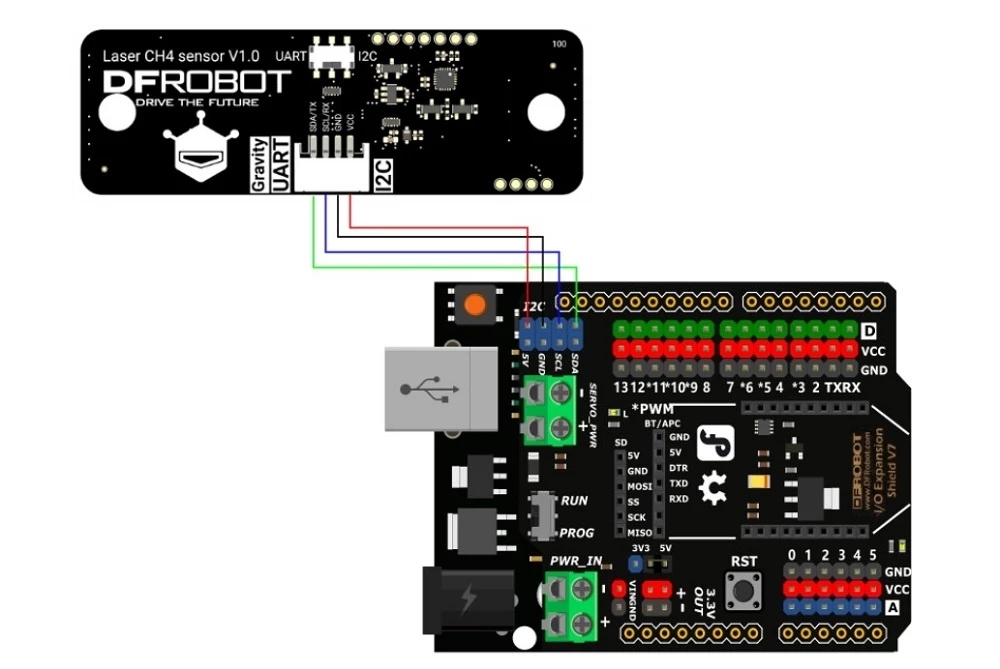
Figure: Wiring Diagram of Gravity: Factory Calibrated Laser Lab-Grade Methane Sensor and Arduino UNO
Lab-Grade Durability, Seamless Connectivity to Laboratory Equipment
Engineered for longevity, the sensor provides 10 years of consistent performance with no drift, eliminating the need for recalibration between tests throughout the course of a long-term research endeavor. Its Tunable Diode Laser Absorption Spectroscopy (TDLAS) technology eliminates electrolyte deterioration, addressing the prevalent issue of mid-trial failure in electrochemical sensors. The device has twin I2C and UART outputs, allowing for smooth interface to a variety of laboratory equipment, data acquisition systems (DAQs), and custom Python scripts.
Applications
- Environmental Engineering: Accurately monitor real-time methane (CH₄) production from anaerobic digesters, biogas upgraders, and landfill sites, even with interfering gases such as CO₂ and H₂S.
- Chemistry and Chemical Engineering: Selectively measuring methane conversion without interference from other process gases allows for precise evaluation of catalyst performance and reaction kinetics.
- Environmental Science: Measuring methane fluxes from natural and agricultural sources (wetlands, rice paddies, soil, permafrost) is appropriate for long-term, unattended fieldwork due to its high stability and automatic data logging.
- Materials Science: Gas Adsorption and Separation Research: Quantify gas absorption and establish breakthrough curves for novel adsorbent materials (e.g., MOFs, zeolites, or activated carbons).
Package Content:
- Gravity: Laser CH4 Sensorx1
- Gravity 4 pin sensor cablex1