Resources
Electrochemical Oxygen Sensor Module With I2C Interface For Ambient O2 Concentration Monitoring
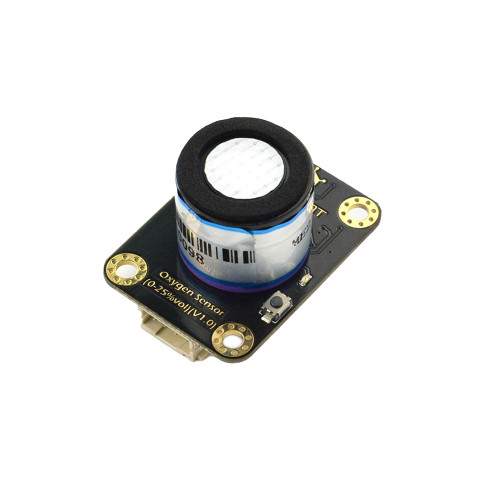
The Gravity Electrochemical Oxygen Sensor is a high-precision gas sensing module designed for accurate measurement of ambient oxygen concentration from 0% to 25% Vol. Based on electrochemical sensing technology, the sensor delivers stable, sensitive, and reliable oxygen detection for environmental monitoring, industrial safety systems, and air quality measurement applications. Its high anti-interference capability ensures dependable performance even in demanding operating environments.
Equipped with a standard I2C communication interface, the sensor can be easily integrated with Arduino, ESP32, Raspberry Pi, STM32, and other microcontroller platforms. The module supports both 3.3V and 5V systems, simplifying integration into a wide range of embedded projects. Built-in polarity protection enhances hardware safety and reliability, making the sensor suitable for long-term oxygen monitoring in warehouses, industrial facilities, mines, portable monitoring devices, and enclosed environments where air circulation requires continuous observation.
Key Features
- Electrochemical Oxygen Sensing: Accurate ambient oxygen concentration measurement.
- 0% To 25% Vol Detection Range: Suitable for environmental oxygen monitoring.
- High Sensitivity: Provides precise O2 concentration detection.
- High Stability: Reliable long-term monitoring performance.
- Strong Anti-Interference Capability: Stable operation in industrial environments.
- I2C Communication Interface: Simple digital data transmission.
- 3.3V And 5V Compatibility: Supports a wide range of microcontrollers.
- Built-In Polarity Protection: Enhances hardware safety.
- Compact Module Design: Easy integration into monitoring systems.
- Microcontroller Compatible: Supports Arduino, ESP32, Raspberry Pi, and STM32.
- Low Integration Complexity: Suitable for rapid development projects.
- Continuous Monitoring Capability: Designed for long-term operation.
Applications
- Portable air quality monitoring devices
- Oxygen concentration monitoring
- Industrial environmental monitoring
- Mine safety systems
- Warehouse air circulation monitoring
- Smart environmental monitoring systems
- IoT gas detection projects
- Industrial automation systems
- Laboratory oxygen monitoring
- Building air quality management
- Safety monitoring equipment
- Embedded sensing applications
Package Contents
FAQs:
Q: What is the measurement range of the oxygen sensor?
A: The sensor measures oxygen concentration in the range of 0-25% vol (volume percent).
Q: How does this sensor communicate with my microcontroller or board?
A: The sensor uses the I2C communication protocol, which is widely supported by microcontrollers like Arduino, ESP32, and Raspberry Pi.
Q: Does this sensor require any calibration?
A: Yes, the sensor requires calibration before use to ensure accurate readings. The product description mentions a calibration command for this purpose.
Q: What is the response time of the sensor?
A: The response time of the sensor, which is the time it takes to detect a change in oxygen concentration, is T90 ≤ 120 seconds.
Q: What applications is this sensor suitable for?
A: The sensor's high anti-interference ability and wide measurement range make it suitable for various applications, including:
- Environmental monitoring
- Industrial process control
- Agricultural applications
- Safety equipment
- DIY projects