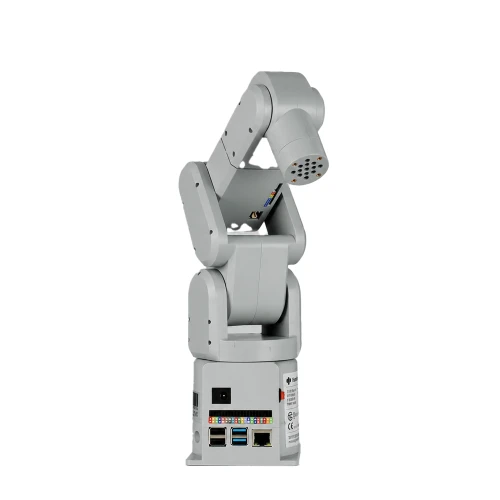
AI-Ready 6 DOF Collaborative Robot With 10 TOPS Edge Computing, 280 mm Reach And ROS 2 Support
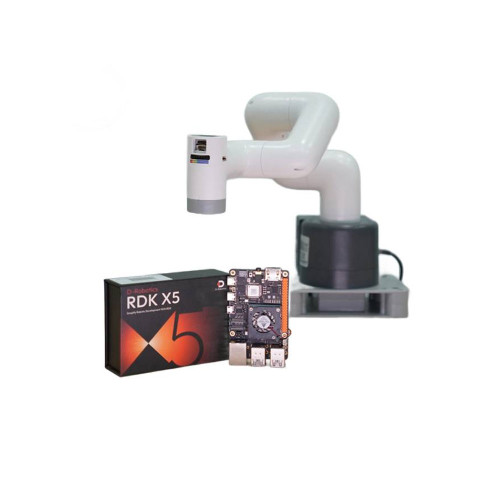
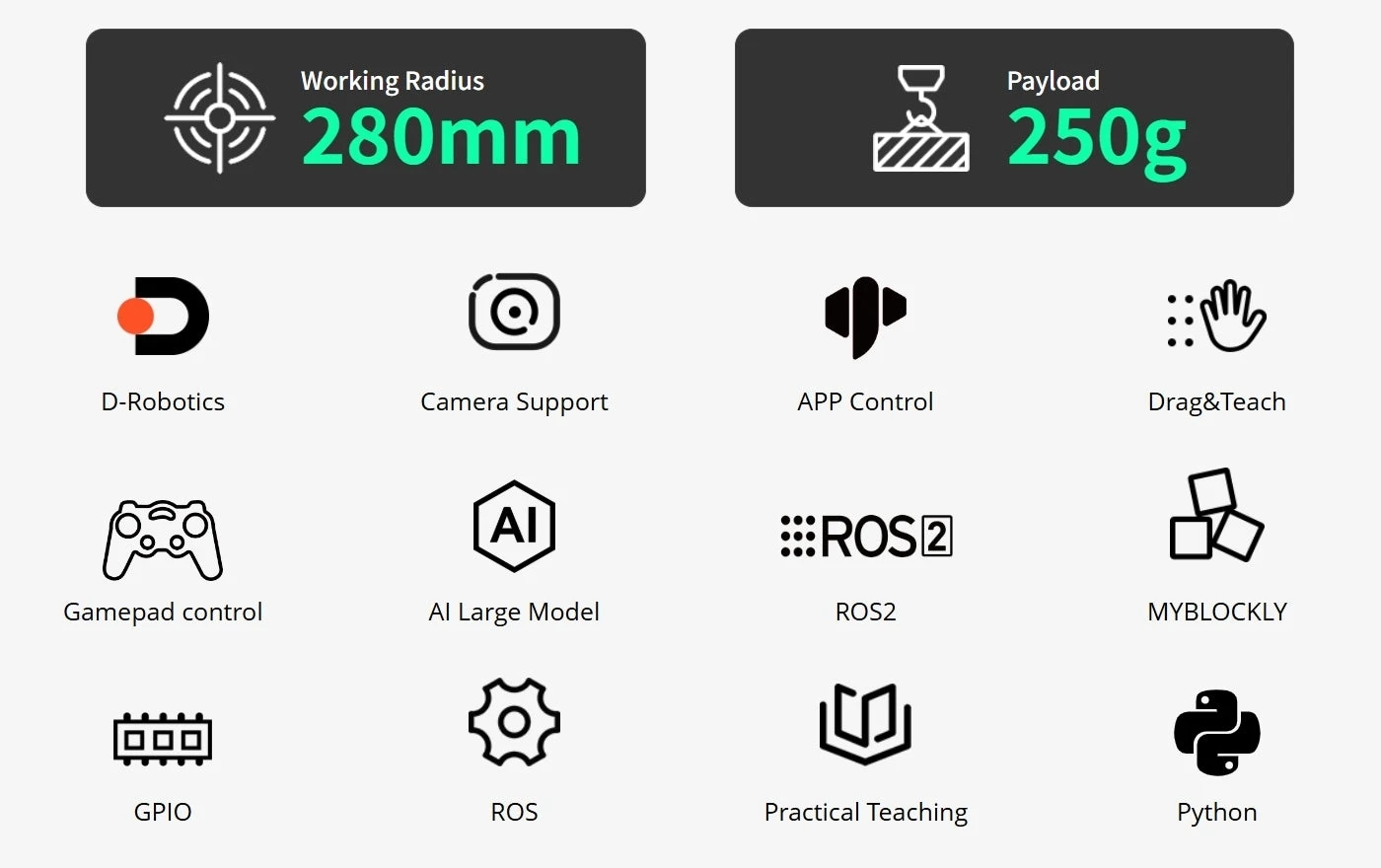
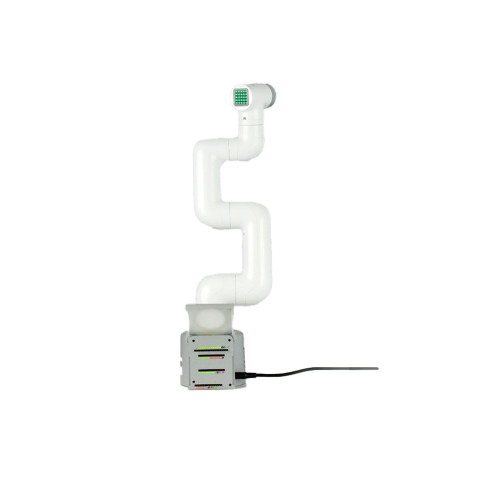
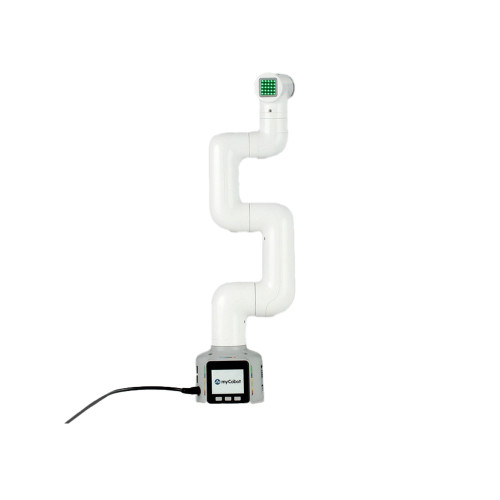
The Elephant Robotics myCobot 280 RDK X5 is a compact 6 DOF collaborative robotic arm designed for AI robotics, computer-vision development, education, scientific research, and automation prototyping. It combines a 280 mm working radius, 250 g payload, and +/- 0.5 mm repeatability with the D-Robotics RDK X5 AI computing platform. The integrated BPU provides up to 10 TOPS of edge inference performance, allowing developers to build vision, perception, language-interaction, and intelligent robotic applications without relying entirely on cloud processing.
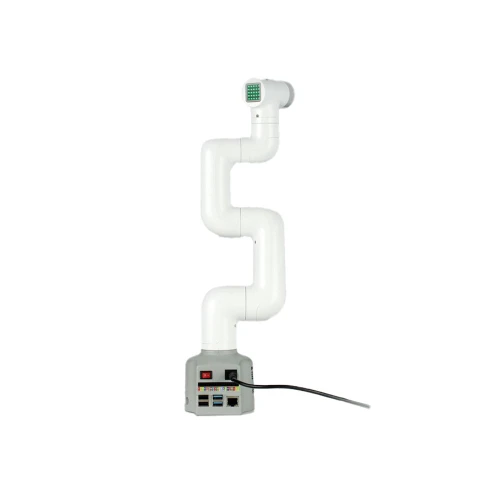
The RDK X5 platform integrates an 8-core Cortex-A55 processor, 32 GFLOPS GPU, and 8 GB RAM in the current myCobot configuration. It supports ROS 2, Python, myBlockly, and myStudio development along with Serial, TCP/IP, and MODBUS communication. Wi-Fi 6, Bluetooth 5.4, Gigabit Ethernet, USB, HDMI, GPIO, CAN, and MIPI camera interfaces provide flexible expansion for cameras, sensors, AI accessories, and other robotic peripherals.
Key Features
- 6 DOF Robotic Arm: Provides 6 independently controlled joints for flexible multi-axis positioning and movement.
- 280 mm Working Radius: Offers a compact workspace suitable for desktop robotics, AI development, and educational applications.
- 250 g Payload: Supports compatible lightweight grippers, cameras, sensors, tools, and workpieces.
- +/- 0.5 mm Repeatability: Provides repeatable positioning for robotics experiments and lightweight automation tasks.
- 10 TOPS AI Computing: Integrated RDK X5 BPU provides up to 10 TOPS of edge-side AI inference performance.
- 8-Core Cortex-A55 CPU: Provides general-purpose processing using an 8-core Arm Cortex-A55 processor operating at up to 1.5 GHz.
- 8 GB RAM: Current myCobot 280 RDK X5 configuration includes 8 GB memory for AI and robotics workloads.
- 32 GFLOPS GPU: Provides additional graphics and computing capability for embedded development.
- RDK X5 Operating Platform: Uses the D-Robotics RDK X5 Robot Developer Kit with RDK OS.
- ROS 2 Support: Enables robot control, application development, simulation, and integration with modern robotics software.
- Python Programming: Supports Python-based robot control and AI application development.
- myBlockly Support: Provides visual block-based programming for education and rapid prototyping.
- myStudio Compatibility: Supports robot configuration, firmware management, and development workflows.
- AI Model Deployment: Supports compatible Transformer, RWKV, perception, vision, and other edge-AI models.
- Vision Development: Suitable for object detection, image recognition, segmentation, OCR, and visual robot-control projects.
- Wi-Fi 6 Connectivity: Supports fast dual-band wireless networking for development and robot communication.
- Bluetooth 5.4: Provides modern short-range wireless connectivity for compatible peripherals.
- Gigabit Ethernet: Includes an RJ45 network interface for high-speed wired communication.
- USB Expansion: Provides multiple USB interfaces for cameras, storage, sensors, and other peripherals.
- MIPI Camera Support: RDK X5 provides 2 MIPI CSI camera interfaces for compatible vision hardware.
- GPIO Expansion: Provides programmable IO for integrating sensors, switches, actuators, and embedded electronics.
- CAN FD Support: Supports integration with compatible industrial and robotic communication systems.
- Trajectory Recording: Allows robot movements to be recorded and reproduced for demonstrations and repetitive operations.
- Drag-And-Teach Support: Enables manual positioning and teaching workflows for compatible applications.
- LEGO and Screw Mounting: Supports flexible mechanical integration of accessories and development hardware.
Applications
- AI robotics development
- Computer-vision robotics
- Robotics education
- University laboratories
- Scientific research
- ROS 2 development
- Python robotics projects
- Object-detection systems
- Image-recognition projects
- Vision-guided pick-and-place
- OCR and visual inspection
- Human-robot interaction
- AI large-model experimentation
- Autonomous robotics research
- Automation prototyping
- Smart laboratory systems
- Machine-vision development
- Edge-AI research
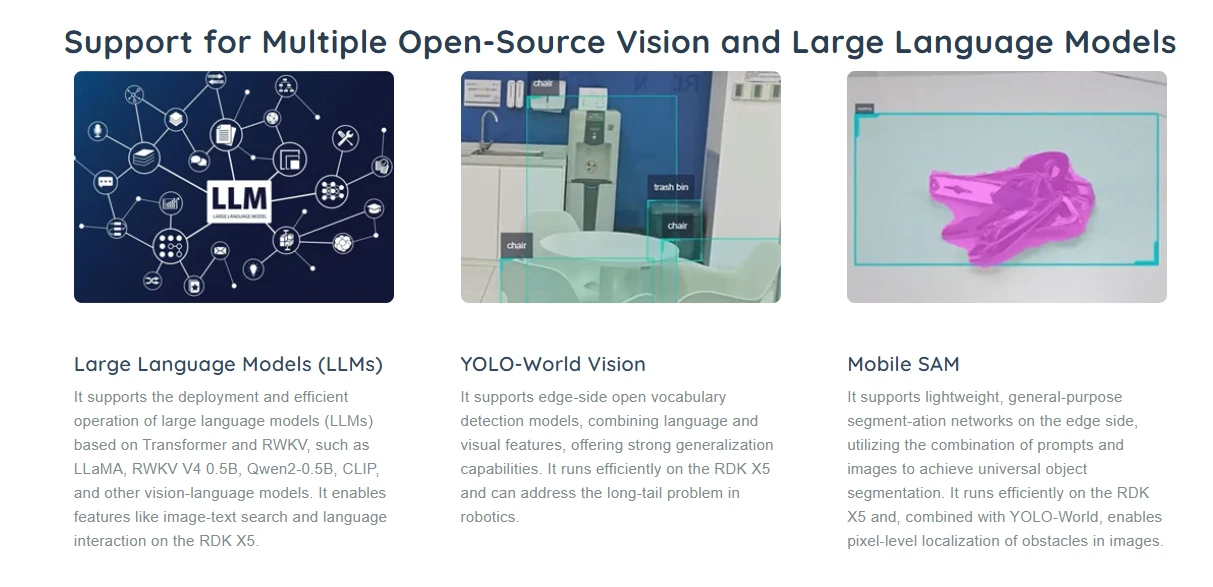
Compatible with RDK AI Kit
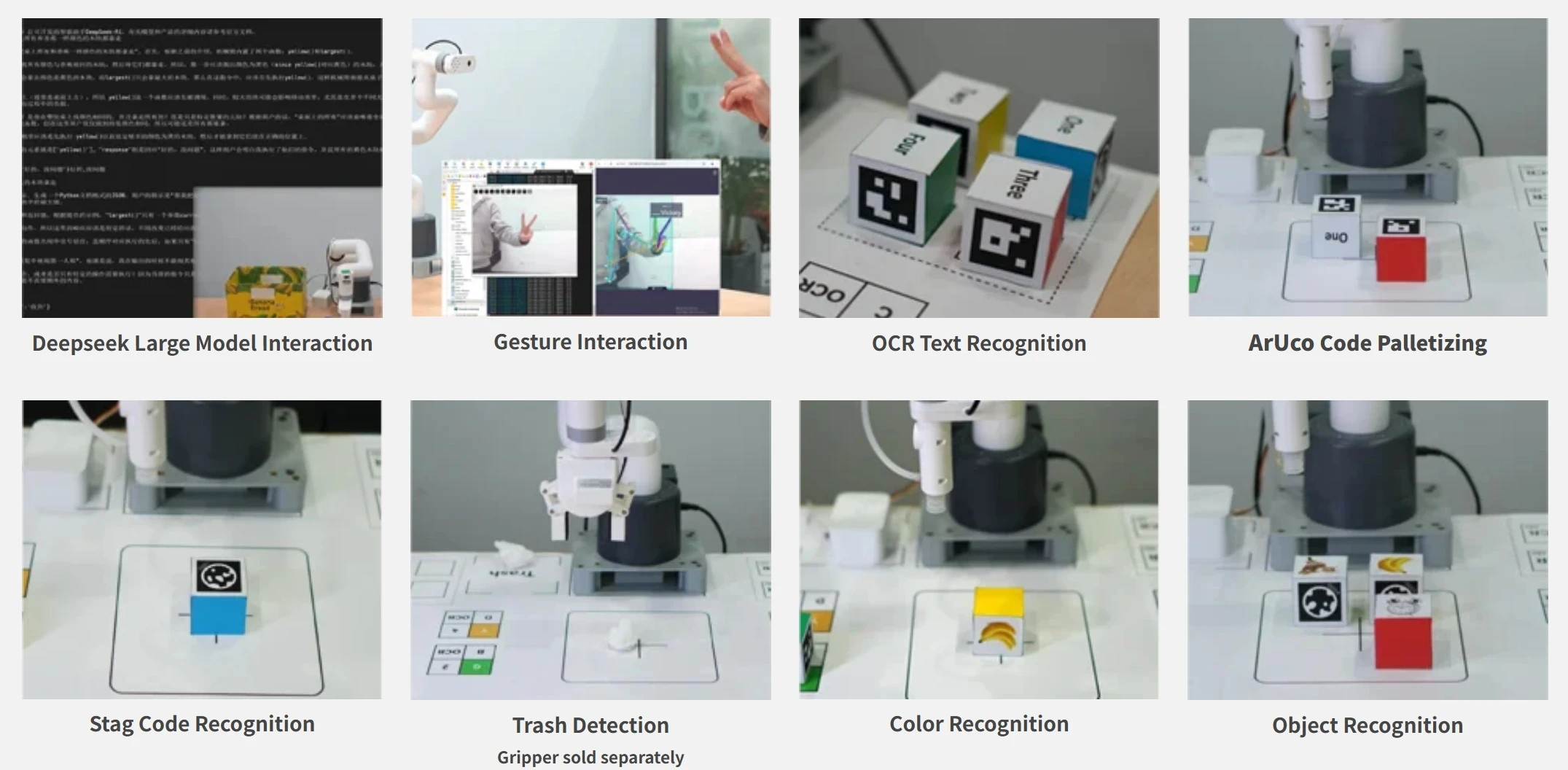
It combines seven visual algorithms and enables the local deployment of the DeepSeek large model. It encompasses uses like object identification using YOLOv8, waste classification detection, ArUco code recognition for palletizing, and text recognition and extraction through OCR. It creates a comprehensive workflow for algorithm application engineering, spanning from image feature extraction to neural network implementation. Utilizing Python code for neural network deployment allows for rapid understanding of AI vision algorithm creation and robotic cooperation skills. This renders it ideal for academic education, robotics laboratories, and individual technical discovery.
High-Performance Configuration
With its powerful product configuration, it can meet your embedded development needs. Through button interactions, screen displays, buzzers, and IO interfaces, whatever you think of can be developed.
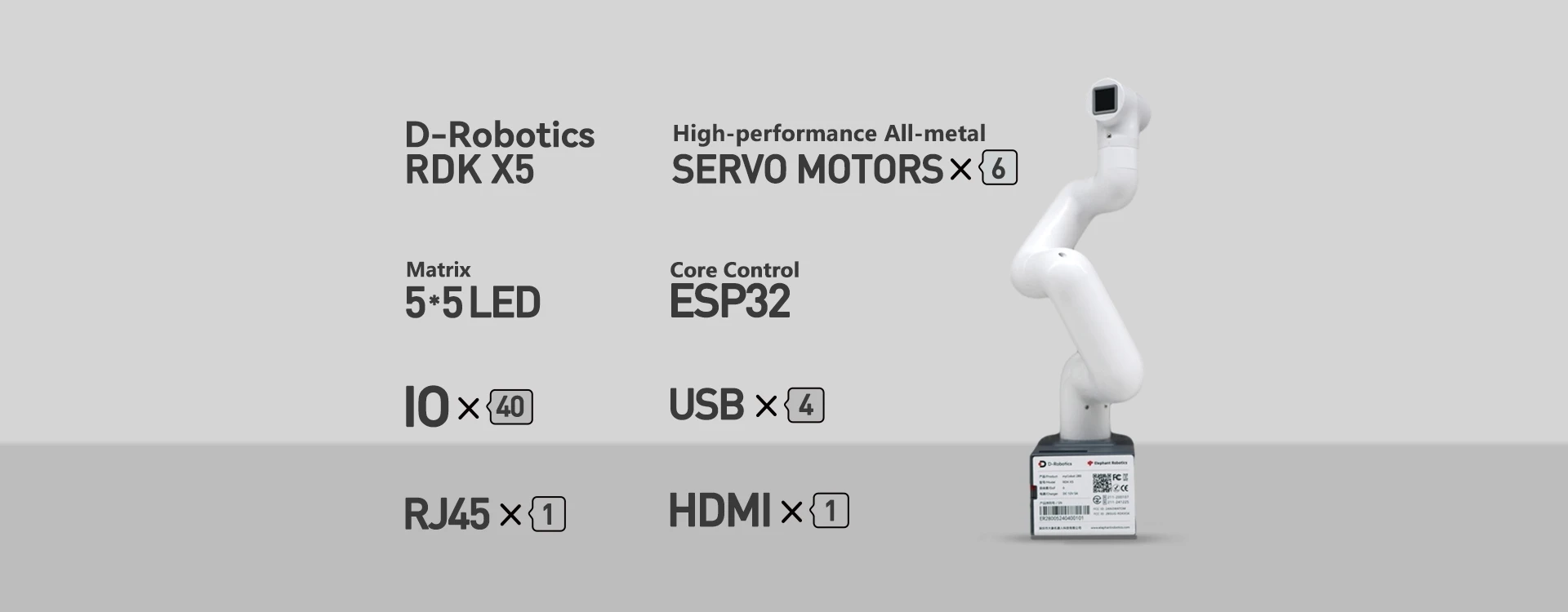
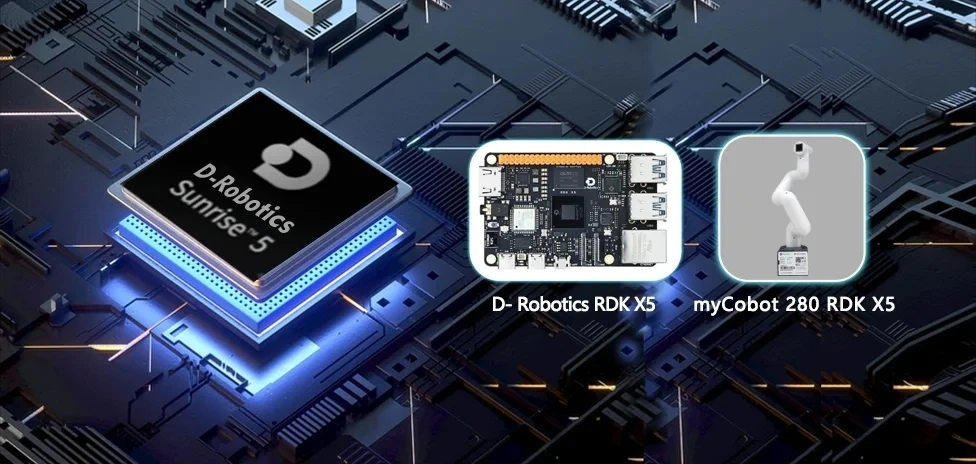
Based on the RDK X5 from D-Robotics
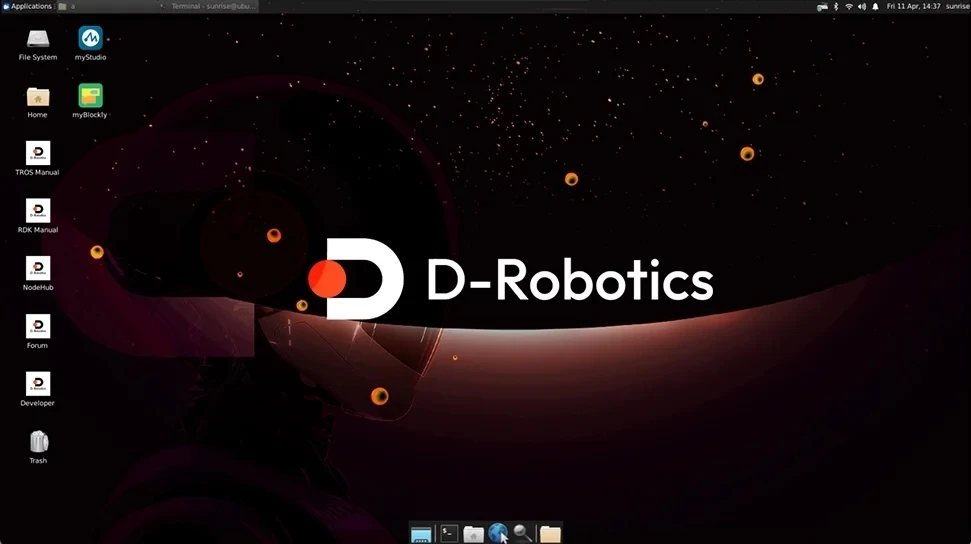
Robot Operating System – RDK OS Simulation Support
RDK OS — A robotic operating system uniquely designed for the RDK series robot development kits, based on Linux and Ubuntu as its core system. It is highly refined based on ROS 2, specifically crafted to deliver exceptional performance, strong reliability, and superior real-time functionality via the robot development middleware TogetherROS.Bot. RDK OS provides a variety of foundational algorithms and model inference interfaces for developing robots. It also incorporates various application features, such as VSLAM, Occupancy, Stereo Perception, Yolo World, and large models, assisting developers in swiftly creating and launching robot applications.
Robot Programming Made Easy
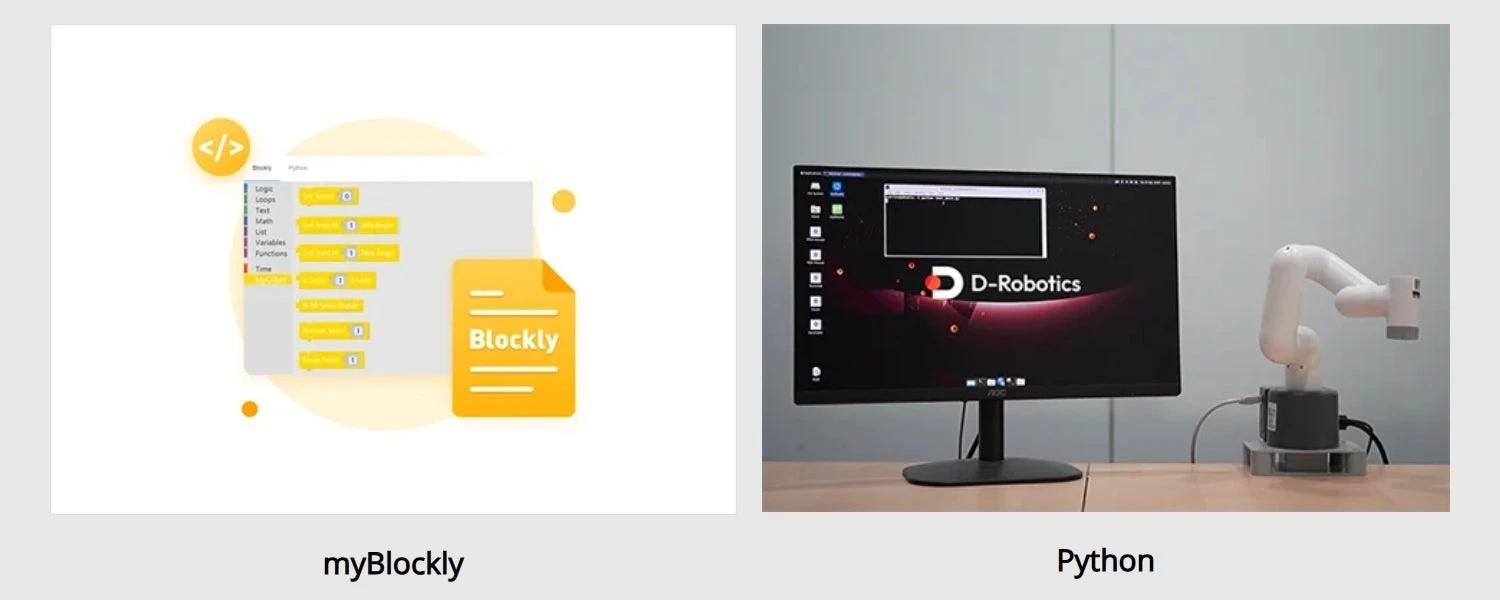
Providing the image-centric drag & drop programming tool myBlockly, tailored for novice education, alongside puzzle-oriented programming and visual debugging features, allows beginners to effortlessly grasp the robotic arm. The Python 2/3 development environment offers various development libraries like OpenCV, QT, pymycobot, among others, meeting users' advanced development requirements in robot control, image processing, and front-end development.