Resources:
Download Quick Installation Guide
Compact 6 DOF Raspberry Pi Robotic Arm With 280mm Reach, 250g Payload And Open-Source Development Support
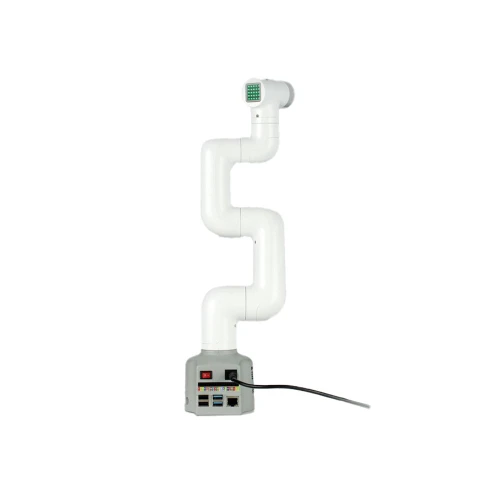
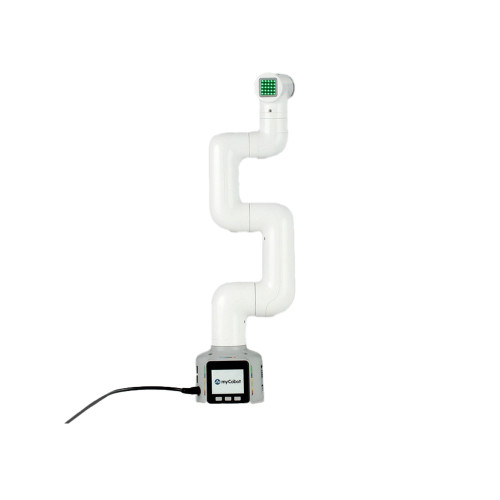
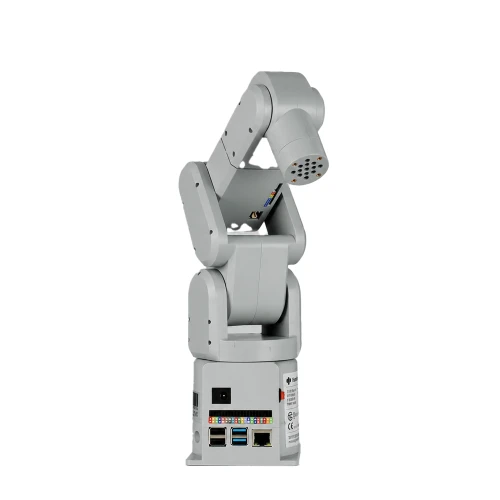
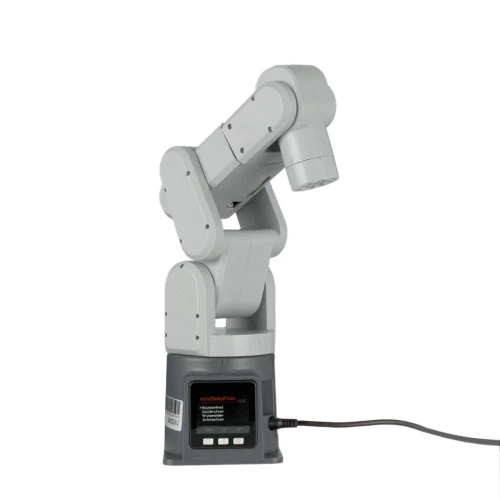
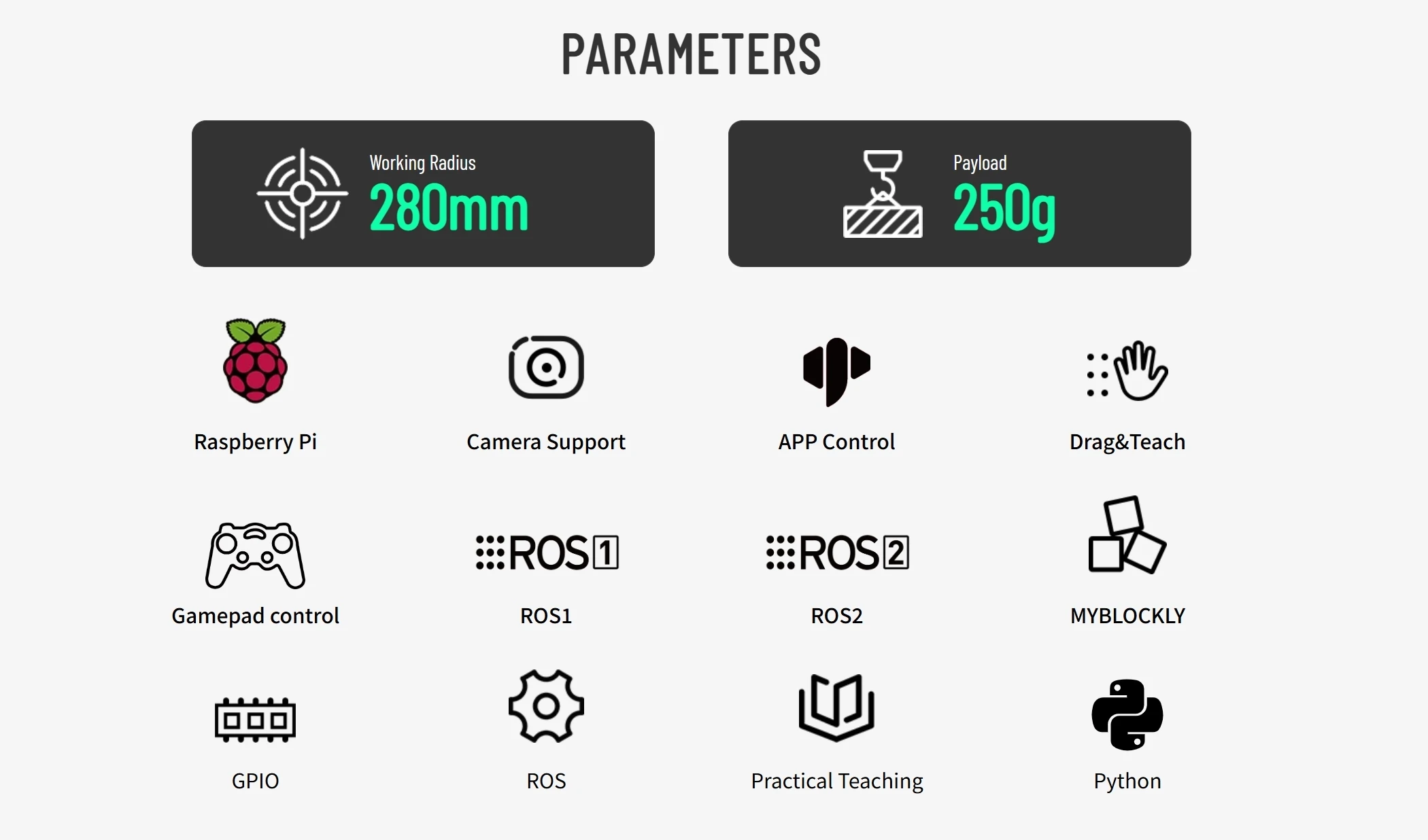
The Elephant Robotics myCobot 280 Raspberry Pi 2023 is a compact 6 DOF collaborative robotic arm designed for robotics education, research, maker development, ROS experiments, and lightweight automation projects. It provides a 280 mm working radius, 250 g maximum payload, and +/- 0.5 mm positioning accuracy while maintaining a lightweight 860 g construction. The integrated Raspberry Pi platform allows the robot to operate as a self-contained development system when connected to suitable display and input peripherals.
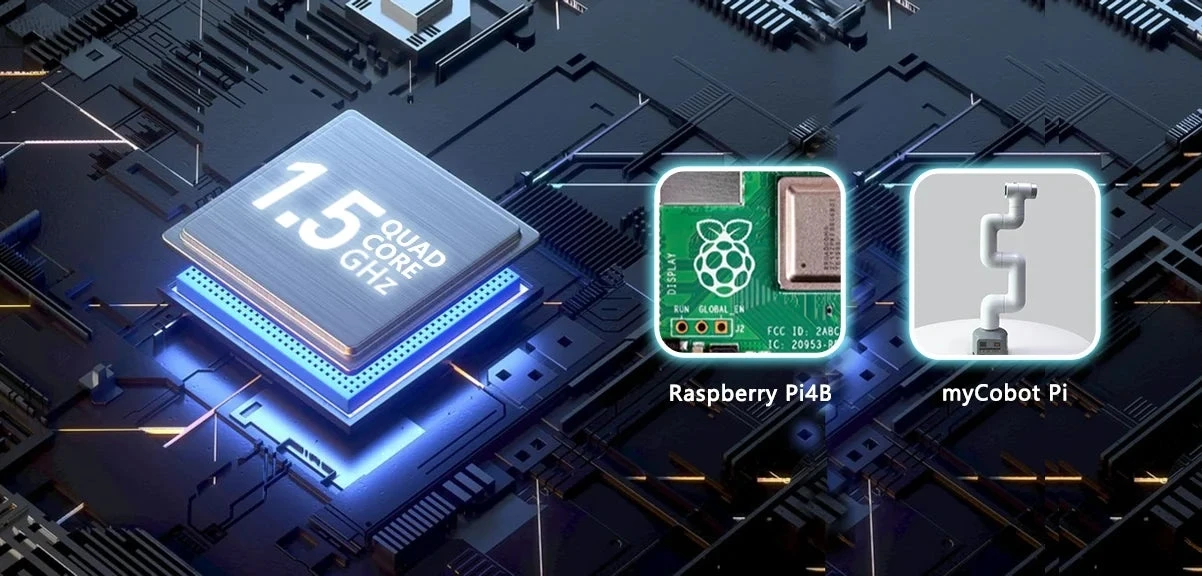
Powered by a Raspberry Pi 4B with a Broadcom BCM2711 64-bit 1.5 GHz quad-core processor and 2 GB RAM, the myCobot 280 Pi provides a flexible environment for Python, ROS 1, ROS 2, myBlockly, myStudio, and Mind+ development. Integrated USB, GPIO, micro-HDMI, Ethernet, Wi-Fi, and Bluetooth interfaces support cameras, sensors, controllers, and other peripheral devices. Its 12-bit magnetic encoders, steel gears, metal housing, and support for joint, Cartesian, free-movement, and trajectory-recording control make it well-suited for hands-on robotics development.
Key Features
- 6 DOF Robotic Arm: Provides 6 independently controlled joints for flexible multi-axis positioning and movement.
- 280 mm Working Radius: Offers a compact workspace suitable for desktop robotics, education, and research.
- 250 g Payload: Supports lightweight grippers, tools, sensors, cameras, and workpieces within the specified load.
- Raspberry Pi 4B Platform: Integrates a Raspberry Pi controller for standalone robot programming and development.
- 2 GB RAM: Provides onboard system memory for robot-control software, programming tools, and supported ROS workflows.
- Quad-Core Processor: Uses a Broadcom BCM2711 64-bit 1.5 GHz quad-core CPU for robot-control and development tasks.
- Open-Source Development: Supports flexible secondary development for education, research, and customised robotics projects.
- ROS 1 and ROS 2 Support: Enables robot control, simulation, motion-planning, and robotics middleware development.
- Python Programming: Supports Python-based robot control for beginners, educators, researchers, and developers.
- myBlockly Support: Provides block-based visual programming for easier robotics learning and rapid prototyping.
- myStudio Compatibility: Supports firmware management, configuration, maintenance, and development resources.
- Mind+ Programming: Supports graphical programming workflows for educational robotics applications.
- Rich Expansion Interfaces: Includes USB, GPIO, micro-HDMI, Ethernet, Wi-Fi, and Bluetooth connectivity.
- 4 USB Ports: Provides 2 USB 3.0 ports and 2 USB 2.0 ports for cameras, peripherals, and development hardware.
- Dual micro-HDMI: Includes 2 micro-HDMI interfaces for compatible external displays.
- Ethernet Connectivity: Provides a network port for reliable wired communication and development.
- 12-Bit Magnetic Encoders: Provides high-resolution joint-position sensing for controlled robotic movement.
- Joint and Cartesian Control: Supports both individual joint movement and Cartesian-coordinate motion.
- Trajectory Recording: Allows robot movements to be recorded and reproduced for demonstrations and repetitive tasks.
- Wireless Control: Supports compatible wireless robot-control and development workflows.
- Metal Housing: Provides a durable structure for repeated laboratory, classroom, and development use.
- Steel Gears: Supports reliable mechanical transmission across the robot's articulated joints.
Applications
- Robotics education
- University laboratories
- ROS 1 and ROS 2 development
- Python robotics projects
- Scientific research
- Maker projects
- Lightweight pick-and-place experiments
- Machine-vision development
- Object-recognition projects
- Robotic arm programming
- Control-logic development
- Human-robot interaction research
- Automation prototyping
- STEM learning
- Camera-based robotics
- End-effector development and testing
Ultra Small & Simple to Use
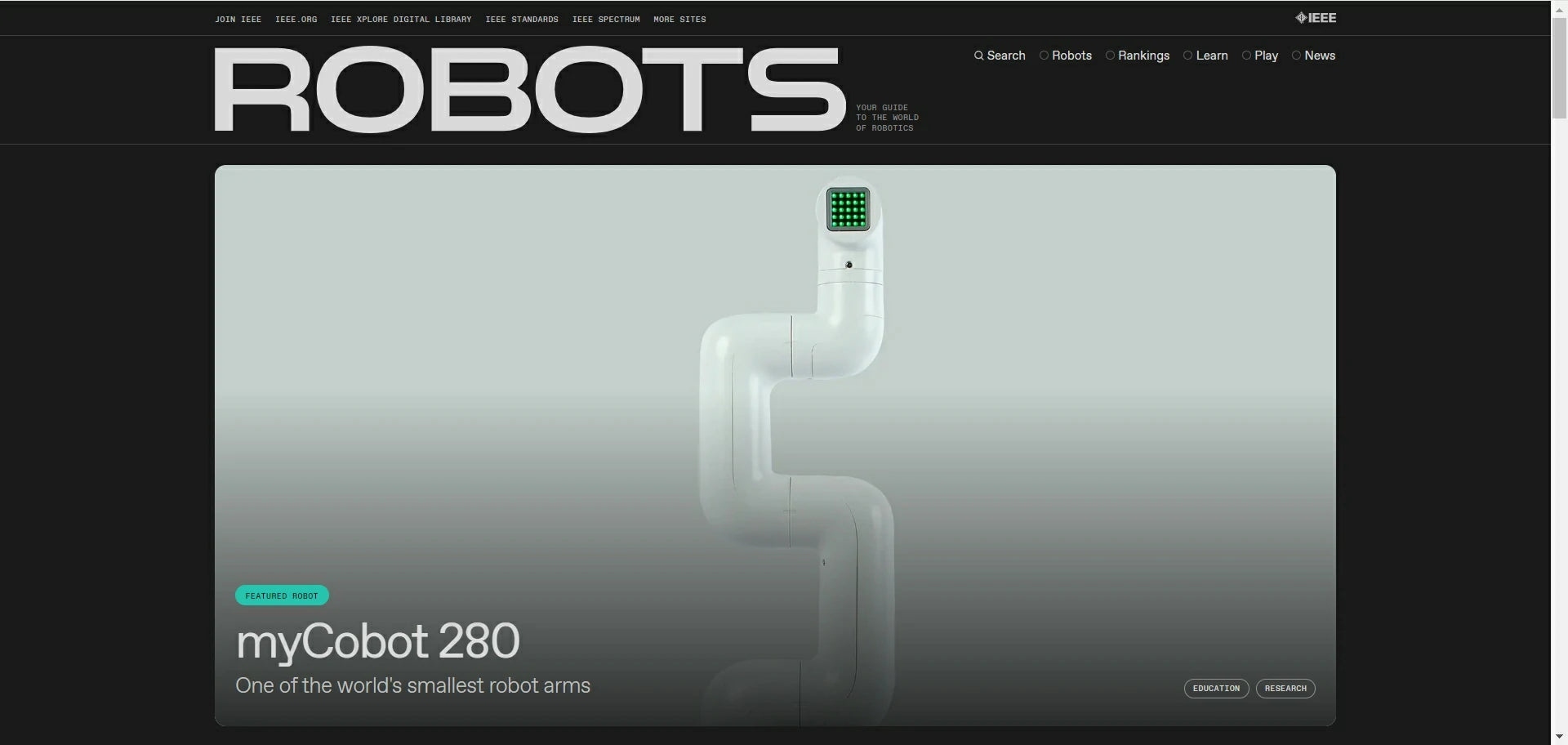
The myCobot 280 Pi is a six-axis robotic arm intended for makers and students to immediately begin learning and playing with robotics. It runs Ubuntu Mate 20.04 and is powered by Raspberry Pi; all you need is a monitor, keyboard, and mouse to get started. It is ideal for robot programming education, control logic development, ROS simulations, and creative projects, since it allows you to easily explore, design, and program your own robotic applications.
Robot Specification with 6 Servo Motors
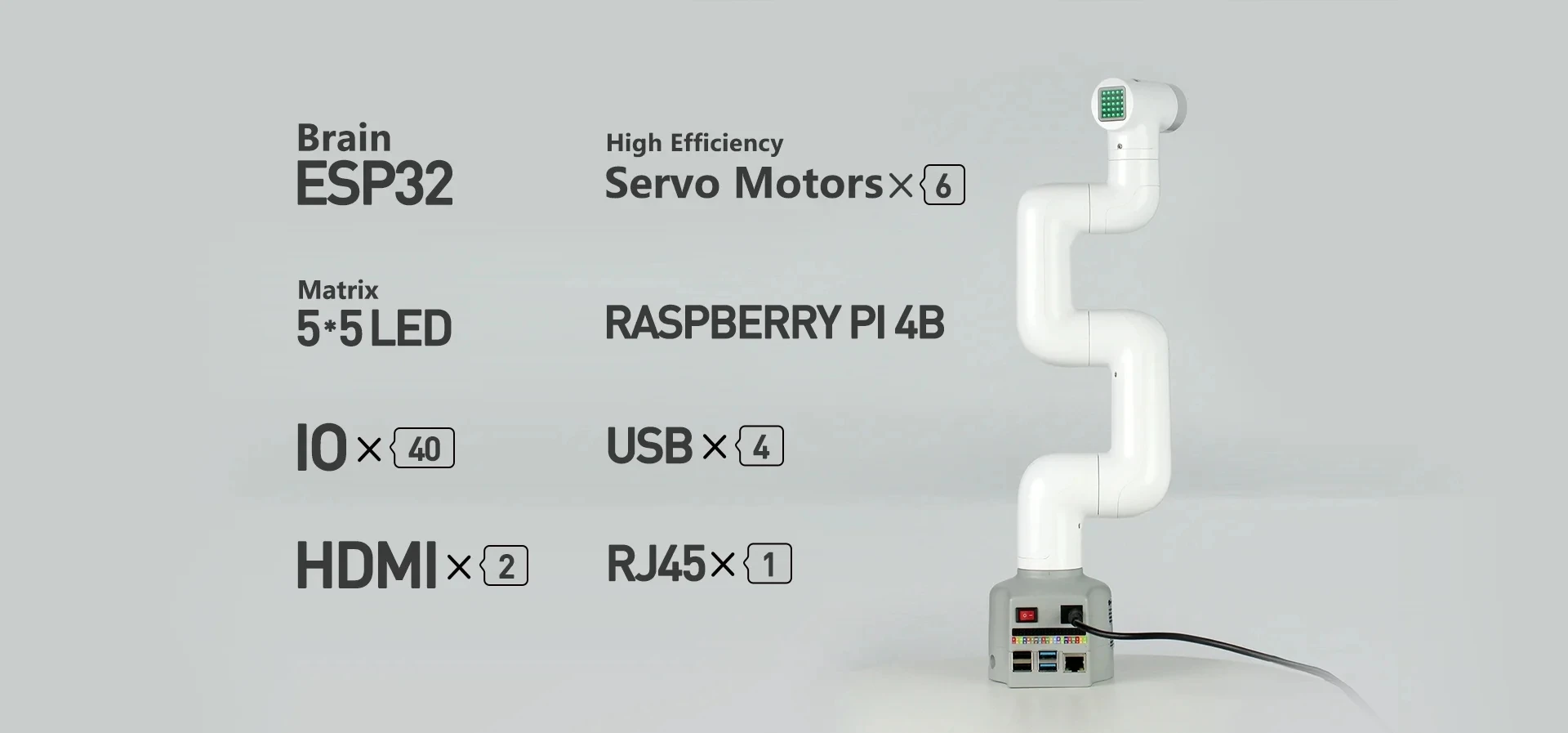
Brained On Raspberry PI 4B
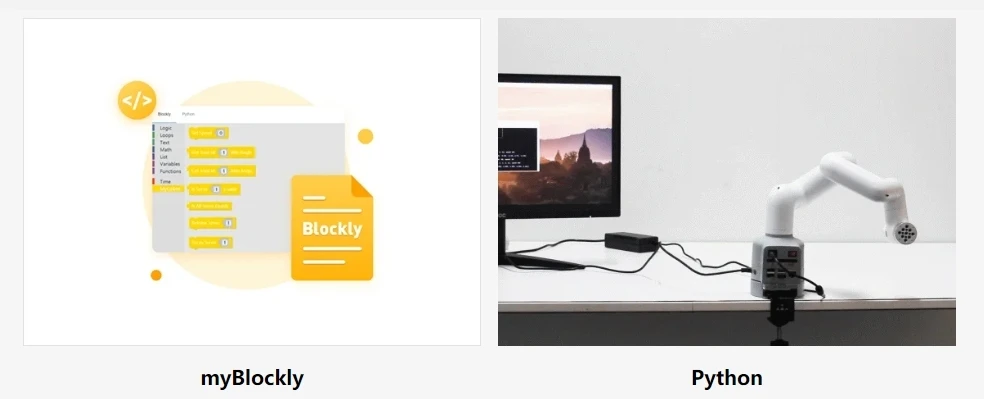
Learn Robotics with Programming
We provide a Gitbook to quickly build a robotic arm development environment, with detailed tutorials on everything from setting up the environment to controlling the robotic arm, and support popular programming languages like Python.
Your DIY Robotic Playground
Powered by Raspberry Pi 4B with built-in actuators and sensors, it lets makers program in Python, C++, or Blockly, experiment, and create with ease. Learn, build, and bring your robotic ideas to life—no limits, all fun.
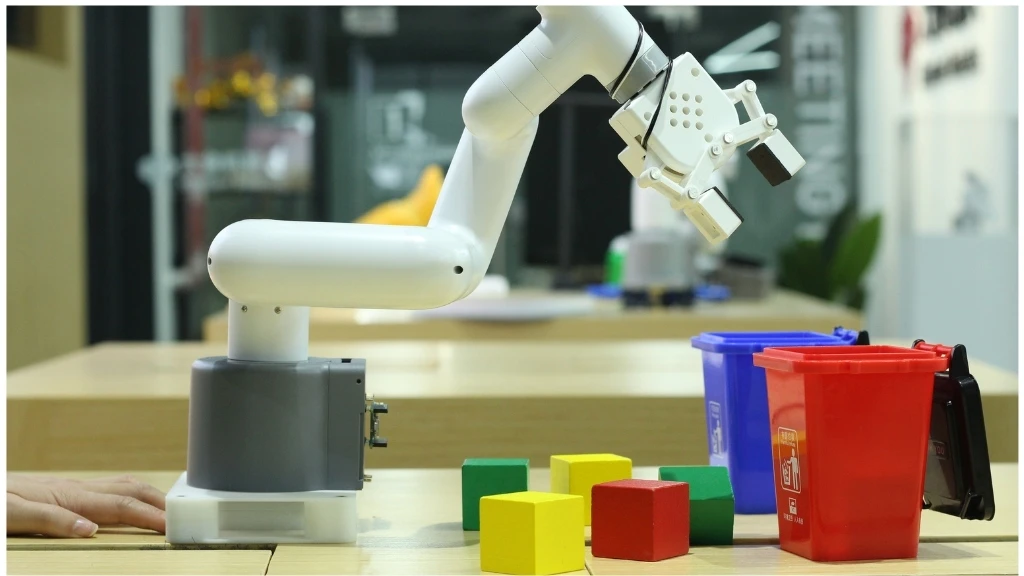
Creative Development
The myCobot 280 series allows you to gain experience in industrial robot development. It has advanced motion control algorithms and a variety of control modes, including angle, coordinate, potentiometer, and radian values. Get realistic programming experience for your projects with an open-source drive library and over 90 robot control interfaces.
Commercial Exploration
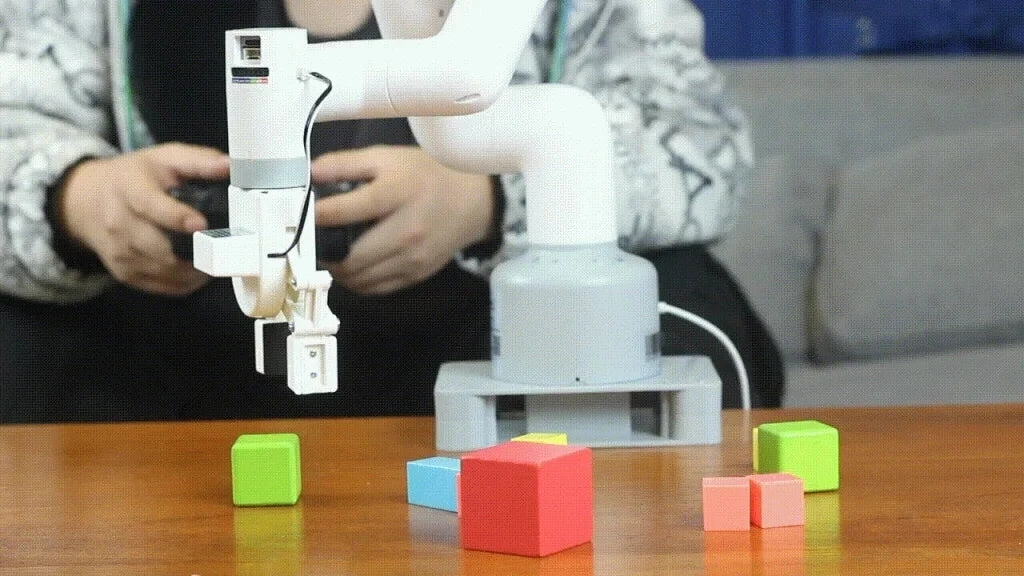
The LEGO interface on the myCobot 280 robot arm allows for secondary development, including the integration of multiple end effector technologies. This functionality enables developers to create a variety of applications, such as robot assistants, item detection, image sorting, face recognition and tracking, and more.