Resources
Connect Linkr to a target device through HDMI and USB, then open a browser to view and control it.
Everything You Need to Work on a Device Remotely
Linkr brings connection, control, recovery, and automation into one compact hardware
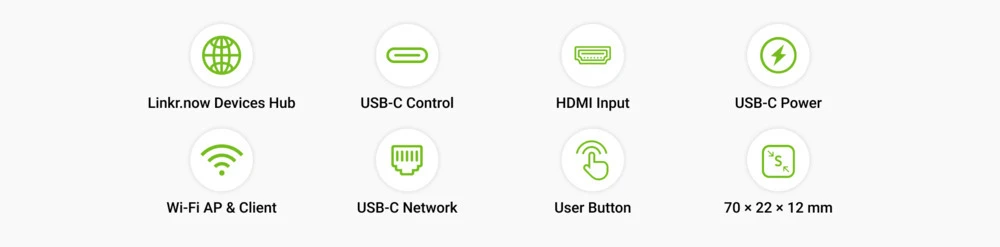
Radxa Linkr is a browser-based remote-control device that lets users, developers, and AI agents view and operate target devices without installing drivers or software. It connects to target devices through HDMI and USB, capturing video and sending keyboard and mouse commands so that humans and AI agents can collaboratively manage hardware from a single browser window. With HDMI video input up to 2K at 30Hz, multiple network connection options, and cross-platform driverless control, Radxa Linkr bridges the gap between physical devices and digital workflows.
The device supports pre-boot access to BIOS and UEFI screens through HDMI capture and USB HID control, making it well-suited for debugging headless servers, managing multiple devices remotely, and enabling AI agents to interact with real hardware. Public APIs, access tokens, and Skills allow scripts, monitoring systems, and AI agents to control devices without a browser login session, extending Radxa Linkr into CI-CD pipelines and automated operations workflows.
Key Features
- Browser-Based Remote Control: View and control target devices directly from a browser without installing software or drivers, with HDMI capture and USB HID control available even before the operating system starts.
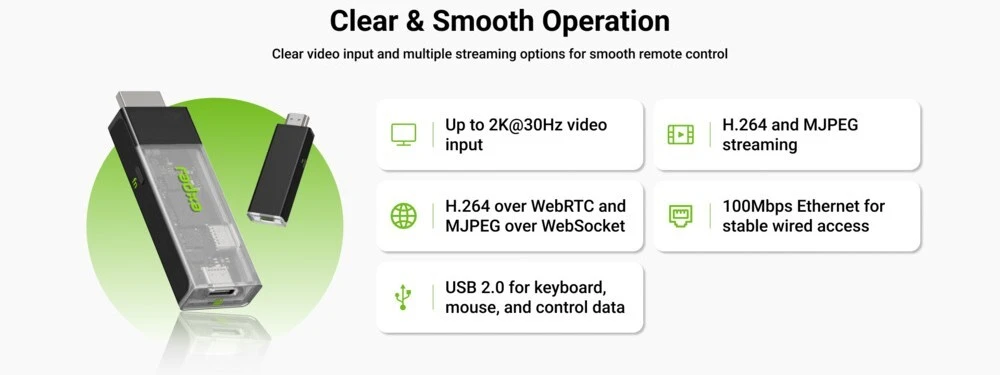
- Clear Video Streaming: Supports HDMI video input up to 2K at 30Hz, with H.264 and MJPEG video streaming over WebRTC or WebSocket.
- AI Agent Collaboration: Public APIs, access tokens, and Skills let scripts, monitoring systems, and AI agents capture the current screen, send keyboard and mouse commands, and integrate with CI-CD and operations tools.
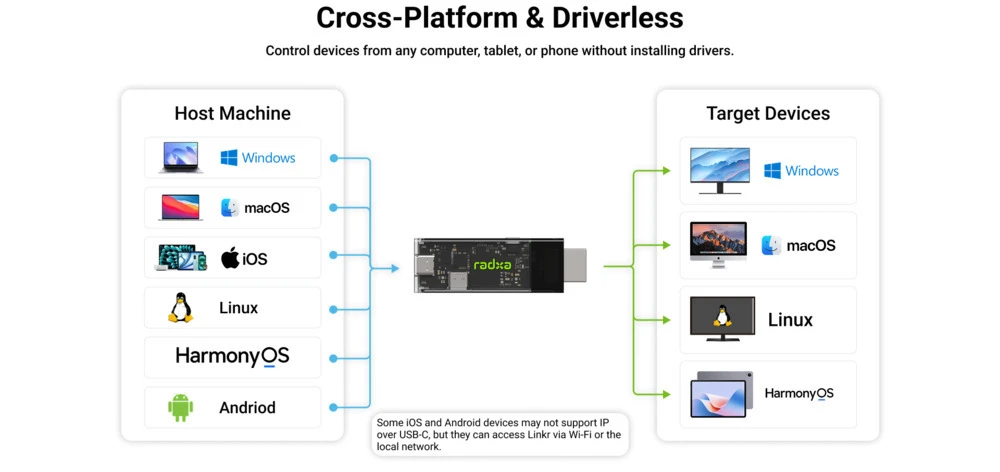
- Cross-Platform Driverless Control: Works across Windows, macOS, iOS, Linux, HarmonyOS, and Android host devices, with Windows, macOS, Linux, and HarmonyOS target devices.
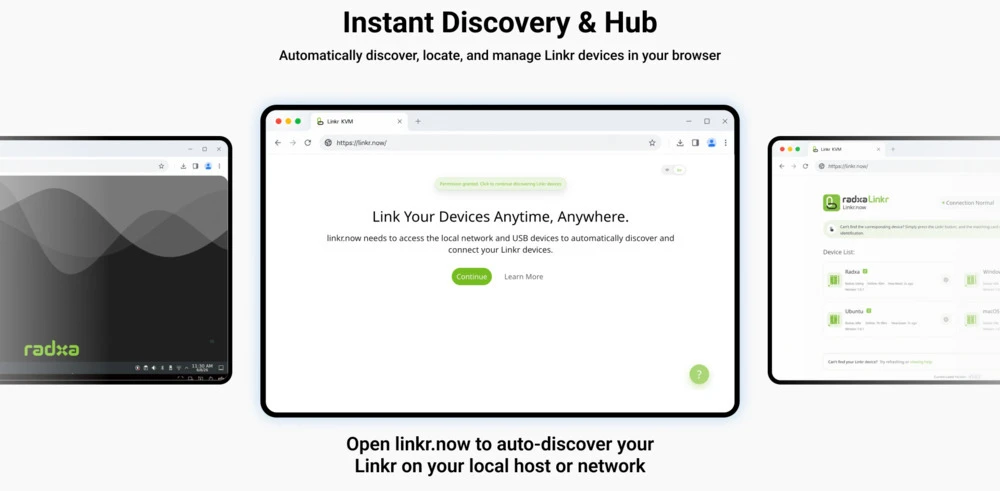
- Linkr.now Device Hub: Provides browser-based discovery and management, with automatic detection of USB-connected and network-available devices plus a unified multi-device console.
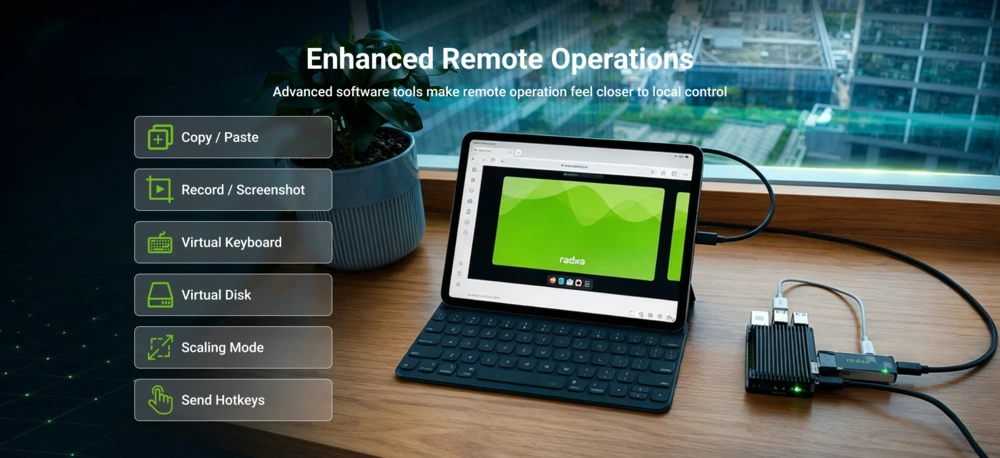
- Enhanced Remote Operations: Includes remote paste, on-screen keyboard, recording, screenshots, custom hotkeys, scaling modes, and absolute or relative mouse control.
- Remote Recovery and Maintenance: Supports Wake-on-LAN, ISO and IMG virtual media mounting, EDID adjustment, local firmware updates, and diagnostic log export.
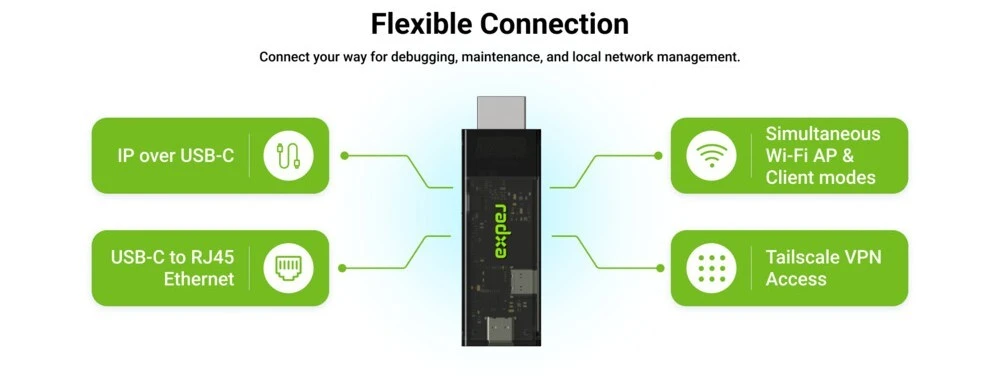
- Multiple Connection Options: Connects via USB-C direct link, USB-C to RJ45 Ethernet, Wi-Fi client, Wi-Fi access point, or Tailscale remote access without port forwarding or a public IP.
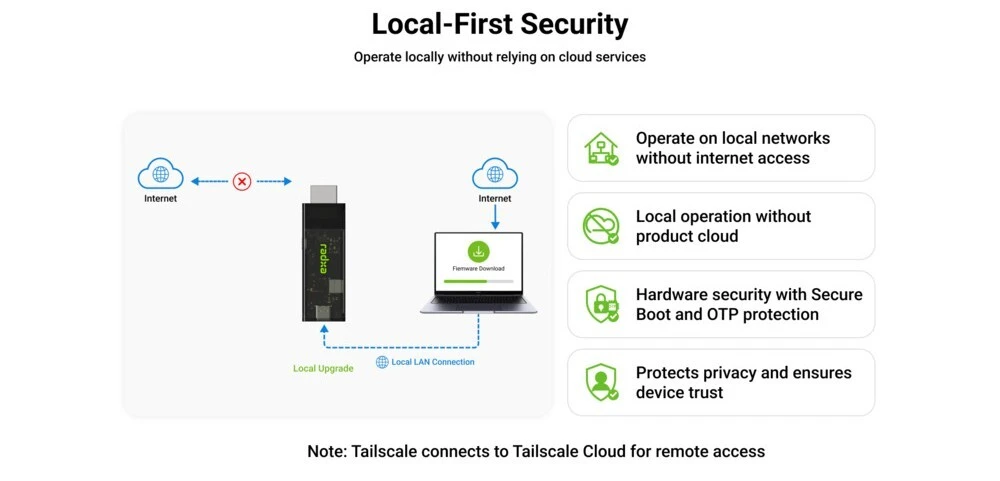
- Layered Privacy and Security: Combines Secure Boot, OTP-based device identity protection, and TOTP two-factor authentication for local-first operation without cloud dependency.
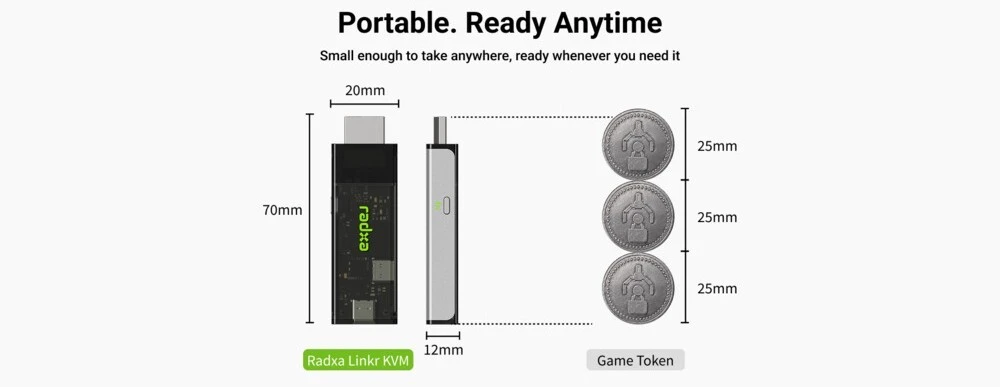
- Compact and Portable Design: Fits in a 70 x 22 x 12 mm enclosure, well-suited for field service and temporary remote-access deployments.
Applications
- Remote debugging of headless servers and out-of-band device management
- Data center and lab management from a single browser console
- AI agent-driven hardware testing and automation
- CI-CD integration for hardware-in-the-loop workflows
- Field service and portable troubleshooting
- Operating system deployment and offline maintenance using virtual media
- Secure remote access to BIOS, UEFI, and boot screens