Resources:
Datasheet
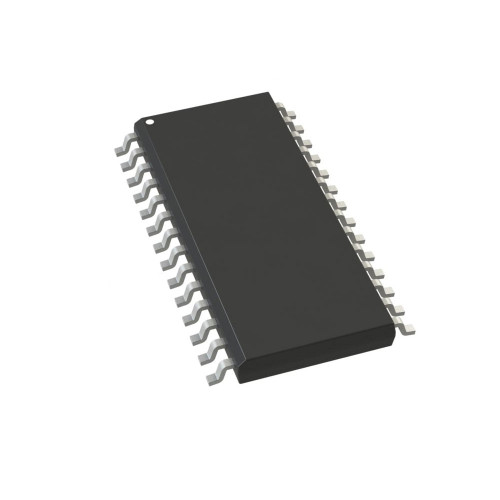
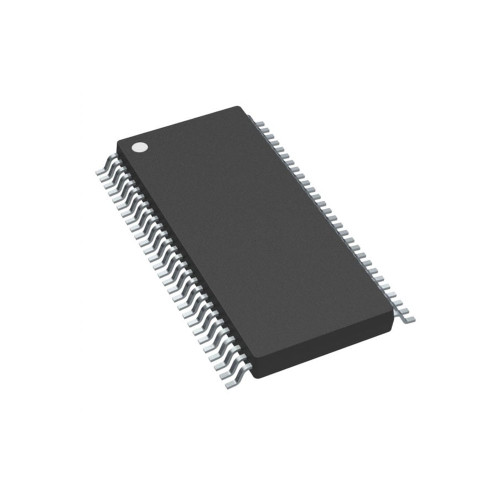
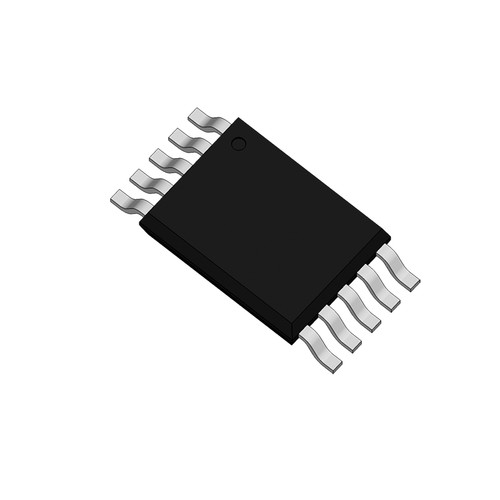
DRV8824PWPR 45 V 1.6 A Bipolar Stepper Motor Driver with 1/32 Microstepping and STEP/DIR Control
The Texas Instruments DRV8824PWPR is an integrated bipolar stepper motor driver designed for printers, scanners, robotics, factory automation, and other precision motion-control applications. It integrates 2 full H-bridge output stages using N-channel power MOSFETs together with a built-in microstepping indexer, allowing direct control of a bipolar stepper motor. Operating from an 8.2–45 V motor supply, the driver can deliver up to 1.6 A from each output at 24 V and 25°C when adequate PCB heatsinking is provided.
A simple STEP/DIR interface reduces the control requirements on the host microcontroller, while MODE0, MODE1, and MODE2 inputs provide full-step, 1/2-step, 1/4-step, 1/8-step, 1/16-step, and 1/32-step operation. Integrated PWM current regulation and selectable slow, fast, or mixed decay modes help optimise winding-current control for different motors and operating conditions. Low-power sleep, a built-in 3.3 V reference output, nFAULT indication, and integrated overcurrent, short-circuit, undervoltage, and thermal protection simplify reliable stepper-motor system design.
Key Features
- Bipolar Stepper Motor Driver: Integrates 2 full H-bridges for controlling the 2 windings of a bipolar stepper motor.
- 8.2–45 V Motor Supply: Supports a broad range of industrial, automation, and electromechanical systems.
- Up to 1.6 A Drive Current: Capable of supplying up to 1.6 A from each output at 24 V and 25°C with suitable thermal management.
- Built-In Microstepping Indexer: Generates winding-current profiles internally without requiring complex microstepping calculations from the controller.
- Up to 1/32 Microstepping: Supports full-step, 1/2, 1/4, 1/8, 1/16, and 1/32-step operation.
- Simple STEP/DIR Interface: Requires only step-pulse and direction signals for basic motion control.
- PWM Current Regulation: Regulates motor-winding current using external sense resistors and reference-voltage inputs.
- Mixed Decay Mode: Combines fast and slow decay for improved winding-current regulation in suitable applications.
- Slow Decay Mode: Recirculates winding current through the low-side MOSFETs for controlled current reduction.
- Fast Decay Mode: Reverses the H-bridge during the decay period for faster winding-current reduction.
- Independent Current References: AVREF and BVREF allow the full-scale current for each H-bridge to be configured.
- Built-In 3.3 V Reference: V3P3OUT provides an internal 3.3 V regulator output that can be used in the current-reference network.
- Low-Power Sleep Mode: Dedicated nSLEEP input disables internal circuitry, charge pump, regulator, and clocks to minimise standby consumption.
- Reset and Enable Control: nRESET and nENBL inputs provide direct control over the indexer and H-bridge outputs.
- nHOME Output: Indicates when the internal microstepping indexer is at its home position.
- nFAULT Indication: Provides a fault output when specified protection conditions occur.
- Overcurrent Protection: Helps protect the power MOSFET output stage against excessive current.
- Short-Circuit Protection: Provides protection for output shorts to ground, supply, or across the motor winding.
- Undervoltage Lockout: Disables the device if the motor supply falls below the valid operating level.
- Thermal Shutdown: Protects the IC from excessive junction temperature.
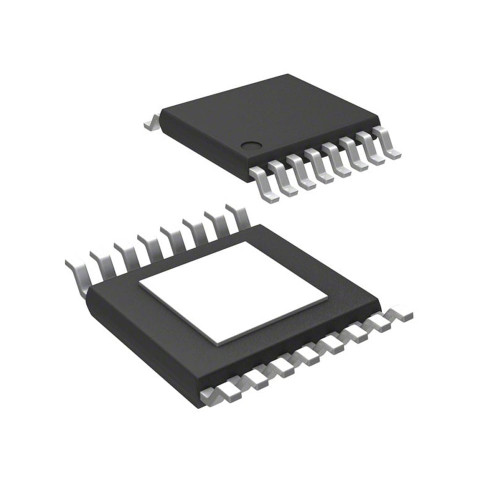
- PowerPAD Package: Exposed thermal pad improves heat transfer from the device into the PCB.
- Industrial Temperature Range: Rated for -40°C to +85°C operation.
- Tape-and-Reel Packaging: DRV8824PWPR is supplied in 2,000-piece reels for automated PCB assembly.
Applications
- Bipolar stepper motor control
- Printers
- Scanners
- Automatic teller machines
- Money-handling machines
- Video security cameras
- Office automation equipment
- Gaming machines
- Factory automation
- Robotics
- Positioning systems
- Motorised mechanisms
- CNC control systems
- Embedded motion-control equipment
- Precision electromechanical systems