Resources:
7Semi EG800AK-CN 4G LTE Pico Module - Quectel EG800AK-CN Cat-1 bis, 10 Mbps, UART, MQTT and HTTPS Protocol Stack for ESP32, STM32, Raspberry Pi, and Embedded IoT Systems
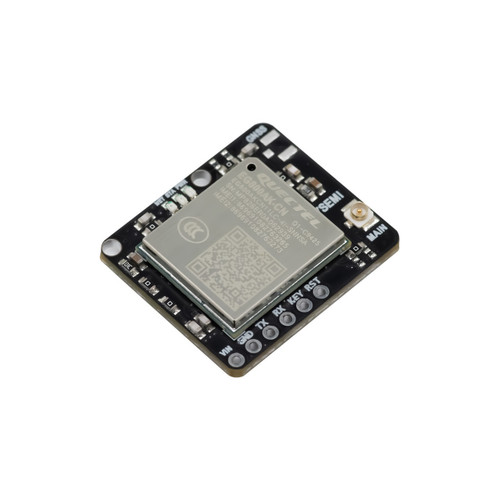
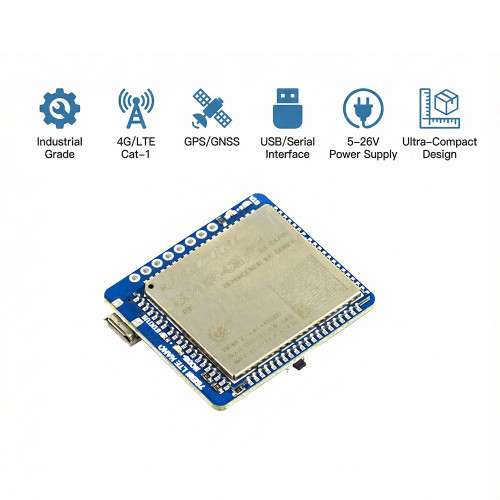
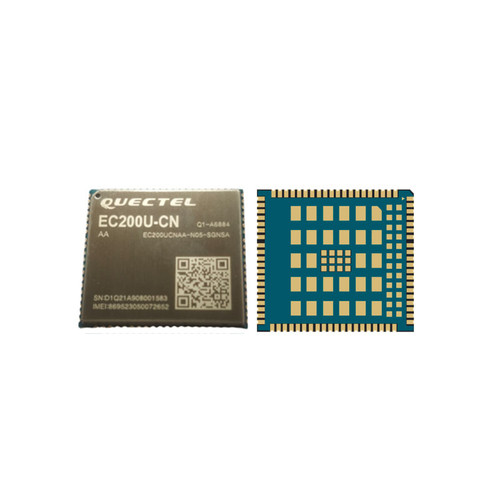
The 7Semi EG800AK-CN 4G LTE Pico Module is an ultra-compact cellular connectivity module built around the Quectel EG800AK-CN LTE Cat-1 bis modem, designed for IoT device integration, industrial automation, telemetry, remote monitoring, smart metering, and embedded communication applications where LTE cellular connectivity is required in the smallest practical module footprint. The Pico designation reflects the module's nano form factor, positioning it as the most space-constrained variant in the 7Semi EG800AK-CN module family and making it the appropriate selection for embedded IoT product designs where PCB area is a primary constraint and the larger 62 x 40mm industrial modem board format is physically impractical. Operating on a 3.3-4.2V DC supply voltage range, the Pico Module interfaces directly with 3.3V microcontroller platforms including ESP32, STM32, and RP2040 without a level shifter or voltage regulator on the UART communication lines, and connects to Raspberry Pi and Linux SBC systems through the same UART interface for direct AT command modem control.
The module's onboard protocol stack covering MQTT, HTTP, HTTPS, TCP, UDP, SSL, FTPS, NTP, and PPP eliminates the need to implement these protocols in the host microcontroller firmware, allowing the application layer on an ESP32 or STM32 host to send high-level AT commands for MQTT publish-subscribe, HTTPS REST API calls, and TCP socket operations without managing the underlying protocol state machines and TLS handshake procedures in the host firmware. This onboard protocol offloading substantially reduces the firmware development complexity and host microcontroller flash and RAM requirements for LTE-connected IoT product development, particularly on resource-constrained microcontrollers where implementing a full HTTPS and MQTT client stack would consume a significant fraction of the available flash and heap. DFOTA (Differential Firmware Over-the-Air) upgrade support enables modem firmware updates to be delivered remotely over the LTE network without physical access to the deployed module, a critical capability for IoT product fleets deployed in field locations where manual firmware maintenance is operationally impractical. The industrial operating temperature range sustains reliable modem and module performance across the thermal extremes encountered in outdoor, vehicle-mounted, and unventilated enclosure IoT deployments where consumer-grade module temperature ratings are insufficient.
Key Features
- Modem IC: Quectel EG800AK-CN LTE Cat-1 bis single-antenna modem for reliable 4G LTE connectivity across India and China operator frequency band coverage
- LTE Category: Cat-1 bis for 10 Mbps download and 5 Mbps upload speeds for IoT data streaming, OTA updates, telemetry, and bidirectional cloud communication
- LTE-FDD Bands: B1, B3, B5, B8 for FDD frequency band coverage across major Indian and Chinese LTE operators
- LTE-TDD Bands: B34, B38, B39, B40, B41 for TDD frequency band coverage across major Indian and Chinese LTE operators
- Supply Voltage Range: 3.3-4.2V DC for direct 3.3V microcontroller platform compatibility without external voltage regulation on the modem supply rail
- Nano Form Factor: Ultra-compact Pico module footprint for space-constrained embedded IoT product PCB integration where larger modem board formats are impractical
- UART Communication Interface: Direct UART AT command interface for ESP32, STM32, RP2040, Raspberry Pi, and Linux SBC modem control without USB-to-serial adapter hardware
- Onboard Protocol Stack: MQTT, HTTP, HTTPS, TCP, UDP, SSL, FTP, FTPS, NTP, and PPP protocol support offloaded to the modem for reduced host firmware complexity
- MQTT Support: Native MQTT publish-subscribe via AT commands for direct IoT cloud broker connectivity without host-side MQTT client stack implementation
- HTTPS and SSL Support: Onboard HTTPS and SSL for secure REST API and encrypted data transmission without host-side TLS implementation
- USB 2.0 Support: USB 2.0 access through the modem for host PC development, diagnostic, and firmware access alongside UART interface
- DFOTA Support: Differential Firmware Over-the-Air modem firmware upgrade over the LTE network for remote fleet maintenance without physical field access
- Nano SIM Card Slot: Onboard Nano SIM holder for standard operator SIM card insertion without an external SIM holder or adapter
- U.FL and IPEX Antenna Connector: Standard LTE antenna connection for external antenna attachment suited to the deployment enclosure and coverage requirement
- Low-Power Operation: Power-efficient Cat-1 bis modem operation for battery-powered and energy-harvesting IoT deployment scenarios
- Industrial Operating Temperature: Industrial-grade temperature range for reliable operation in outdoor, vehicle-mounted, and unventilated enclosure IoT deployments
- Broad Platform Compatibility: Compatible with ESP32, STM32, RP2040, Raspberry Pi, and Linux SBC platforms for rapid LTE-enabled product development across the embedded ecosystem.
Applications
- ESP32, STM32, and RP2040 IoT product builds requiring LTE Cat-1 bis connectivity with onboard MQTT and HTTPS protocol offloading to reduce host firmware complexity and resource consumption
- Smart metering and utility monitoring builds require reliable LTE uplink with MQTT cloud broker connectivity in locations where Wi-Fi coverage is unavailable or unreliable
- Industrial telemetry and remote monitoring systems requiring compact nano form factor LTE module integration in space-constrained panel and enclosure PCB designs
- Asset tracking and fleet management builds in India and China, requiring Quectel EG800AK-CN multi-band LTE-FDD and LTE-TDD operator coverage without band-specific modem selection
- Battery-powered and energy-harvesting field IoT sensor nodes requiring low-power Cat-1 bis LTE connectivity with DFOTA remote firmware update capability for unattended deployments
- Raspberry Pi and Linux SBC industrial gateway builds requiring a compact UART-connected LTE modem with full TCP, UDP, SSL, and PPP protocol stack for cellular WAN uplink.